
5 offbeat pieces of gear for experimental music
The word “experimental” is broad enough to be almost useless. But for our purposes, we’re embracing the wide breadth of the term and recommending a few pieces of gear that have a variety of applications across disciplines. Whether you’re a musique concrète practitioner or just trying to get some weird sounds for your beats, these should take you to some interesting sonic frontiers.
KOMA FIELD KIT
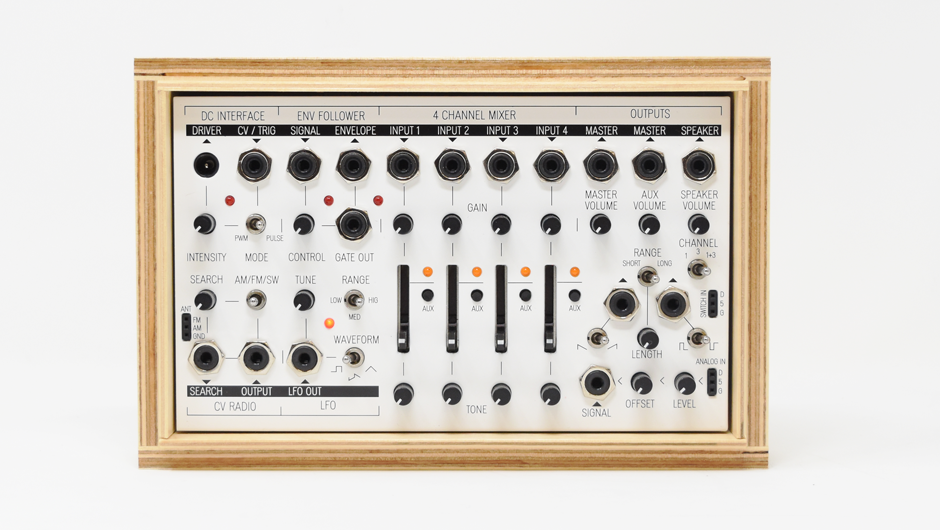
Image courtesy of Koma
The Field Kit is described as an “Electro Acoustic Workstation,” and provides all the flexibility that implies. It includes a four channel mixer, an aux send, an envelope follower with gate output and an LFO. That’s all pretty cool, but the really interesting inclusions are the AM/FM/Shortwave radio and the DC interface, which allows you to power DC motors at a controllable rate. Use your LFO, your envelope follower, or just about any other signal to modulate any of these parameters. Sputtery radio frequencies, clacking motor sounds and weird feedback are all at your disposal. Koma also sells an accessory kit that includes contact mics, solenoid motors and more.
DISCREET ARCHIVE SEAPHONE
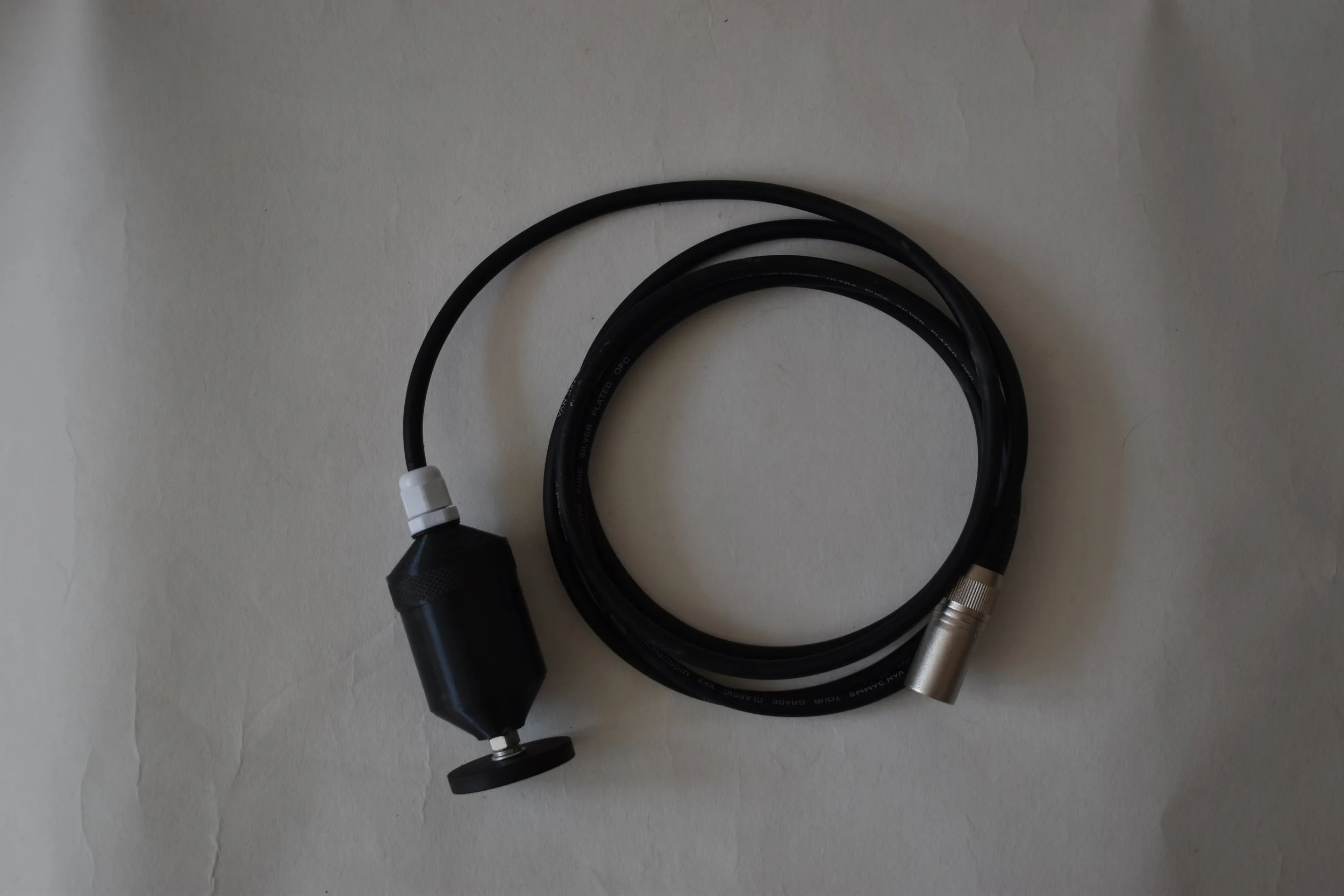
Image courtesy of Discreet Archive
Discreet Archive is a label that specializes in the exploration of very quiet sounds. To that end, they also produce a very interesting line of microphones designed to record those sounds. The Earthphone and Seaphone are based around the same component: a geophone, which converts seismic waves into audible frequencies. The Seaphone is, of course, waterproof, and will soon be the only version available, which really only expands your sonic palette for an extra 30 Euro. Included with the Seaphone is a magnet, ground spike and suction cup, which allows you to affix it to a variety of different surfaces. The best part? No phantom power required; you can plug this straight into a portable recorder and go nuts.
BASTL MICROGRANNY
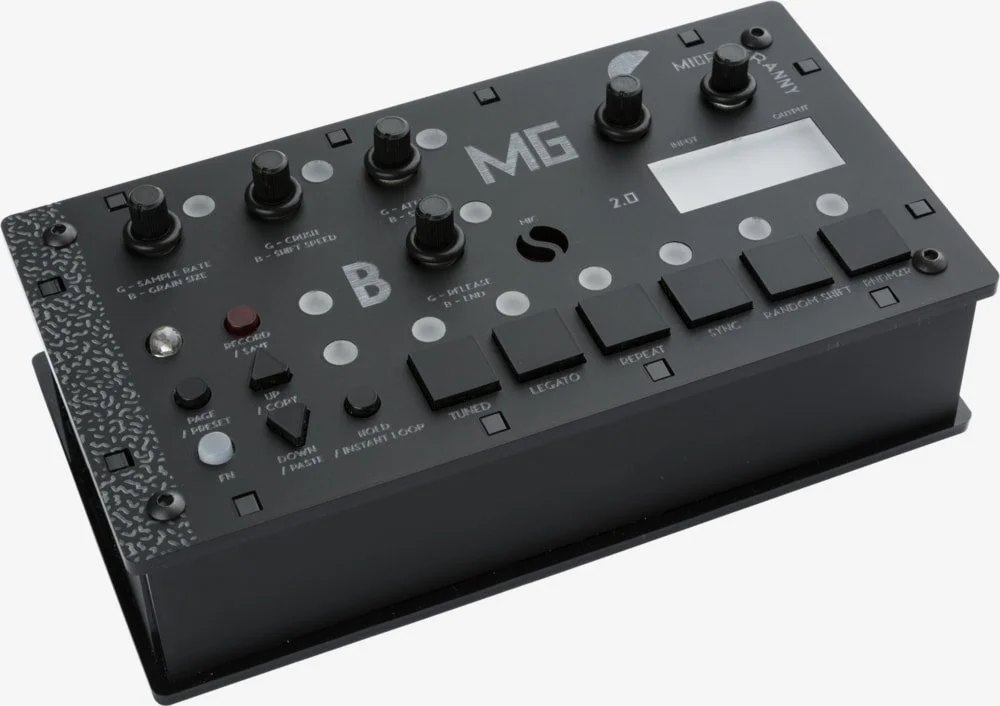
Image courtesy of Bastl
The Microgranny (of which there are 3 versions: 1, 2 and Monolith) is unfortunately discontinued. However, they can be found all over the used market for very reasonable prices, and the possibilities it can unlock are wide. The Microgranny is a lo-fi granular sampler, allowing you to select very small slices (or “grains”) from a recorded sample. You can control the distribution of the grains to create interesting pads or narrow stutter effects. It has six non-velocity-sensitive pads and multiple banks, which you can organize via the included SD card. You can even record from the in-box microphone, which will allow you to manipulate room or nature sounds. A resampler’s dream!
SOMA RUMBLE OF ANCIENT TIMES
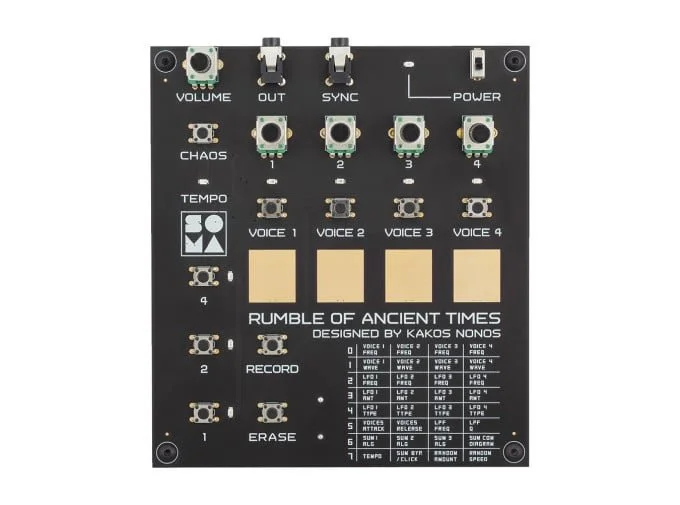
Image courtesy Perfect Circuit
The Rumble of Ancient Times is the weird little cousin to the much sought-after Lyra 8, a complex drone synthesizer also made by Soma. It’s an 8-bit noise synthesizer, and while that might immediately turn off those who are looking for higher fidelity synth tones, keep reading! It has 4 oscillators and is controllable via the touch pads below each. It has a kind of staggering amount of modulation options, as well as the option to record inputs for weird loops. You can even clock it to external gear. If you need a fountain of glitchy noises to play with, ROAT has your back at a sub-$200 price.
CIAT-LONBARDE PAPER CIRCUITS
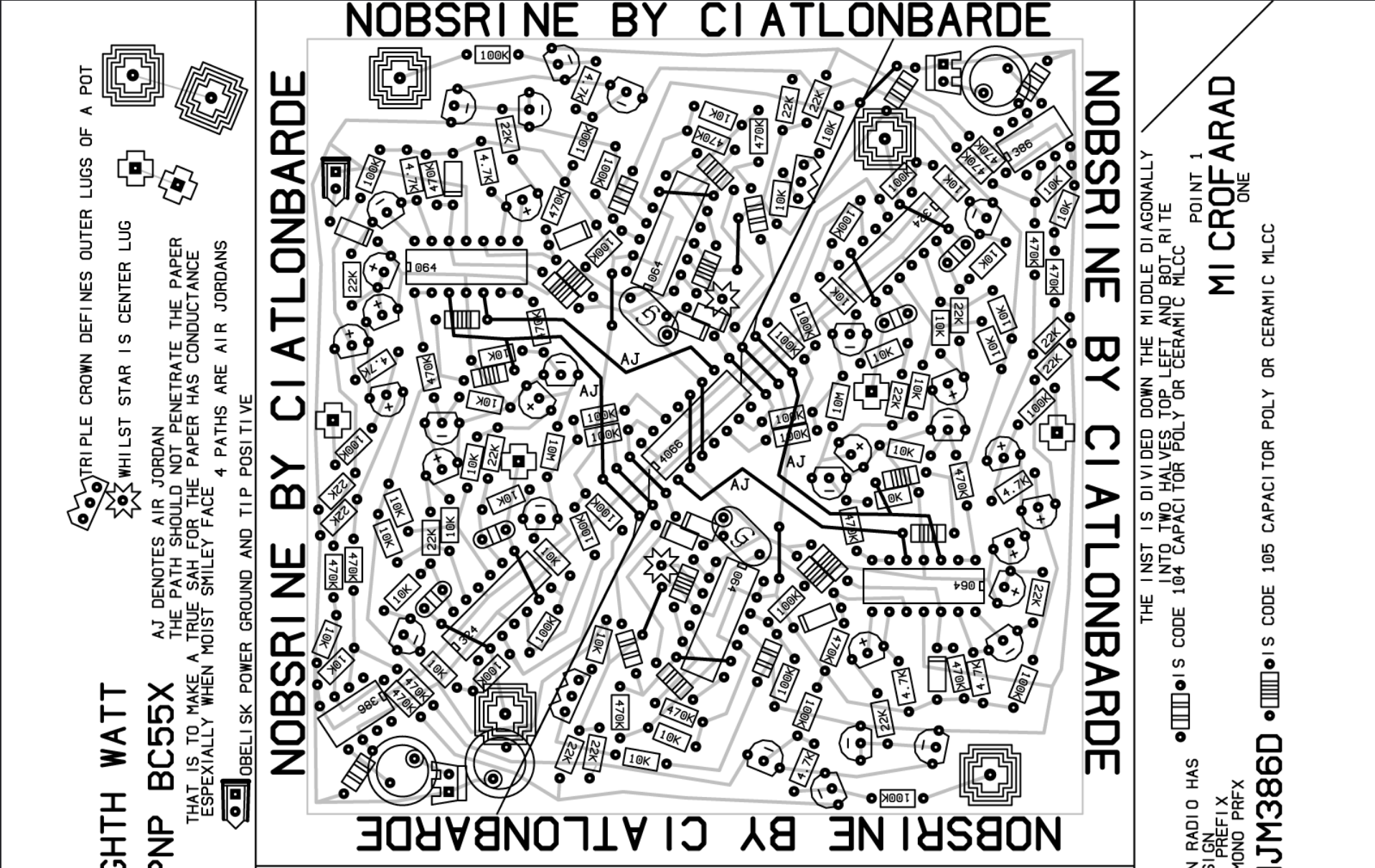
Image courtesy Ciat-Lonbarde
This is for the truly adventurous. Peter Blasser, known for making some of the most esoteric synthesizers in the history of the medium, is also known for creating “paper circuits,” which eschew the durable printed circuit board for a sheet of paper you can print at home. Builders just need to acquire the bill of materials, (available for each circuit) and follow along with the diagram to make the connections. Will it require a lot of trial and error? Undoubtedly. Do you need to know how to solder? Unquestionably. But having played with a few of these devices over the years, they really offer up something unique. Every build is different and, in many ways, ephemeral; paper, as we know, degrades. But the idea is to make something yourself without regard to YouTube-ready build quality. Check out the gallery of different builds on the link above to see what people have cooked up over the years.
