
DI Guitars that Sound Like They Were Recorded Live
It’s really remarkable how far amp sims and impulse responses have come in terms of their ability to recreate a live recording studio sound on a laptop. But the trained ear can still detect a purely digital signal if all you do is use a good amp sim.
Now that more and more players are using amp sims, the hollow digital sound is much easier to hear. I personally love an untamed live sound, but obviously we can’t all get to a studio every day. The good news is there are tricks for replicating that monster live sound from your bedroom.
Here’s the signal chain I use to take a good amp sim tone and turn it into an excellent live tone:
Step One: Amp Sim
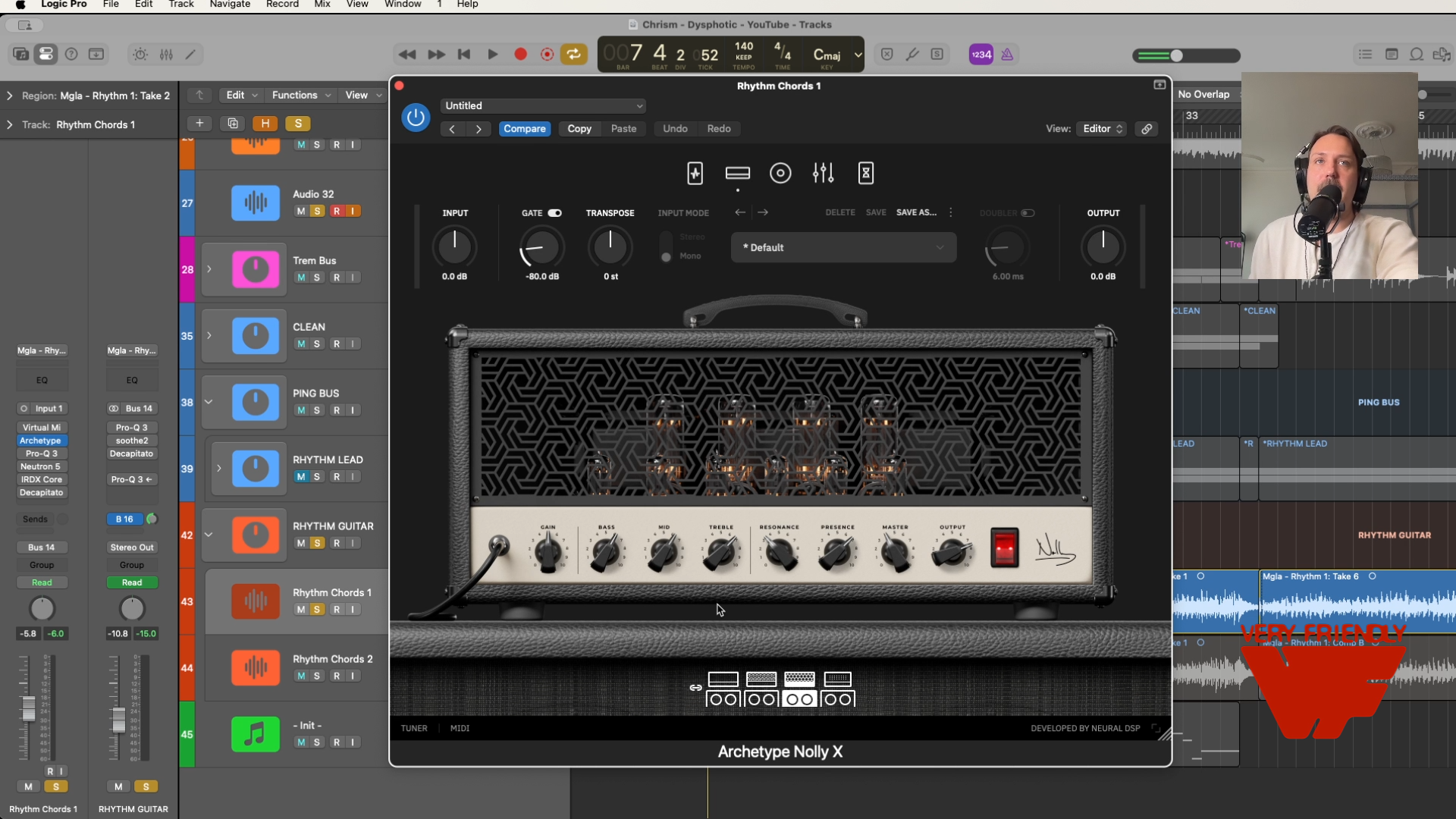
Use a great one. There are plenty of options. I use Neural DSP amp sims 90%+ of the time. Here’s how I’m dialing the Nolly X amp sim, which is a great plugin. The third amp is a 5150, which is good for everything.
Step two: irs (York audio)
If you don’t have a great IR, none of this stuff works. The cab is where the tone truly lives. I love York Audio, and when I’m in the studio I’ll usually grab a Shure 57 and a Royer-121. What’s cool about York Audio is you do exactly that: blend and level them to taste, on a simulated Mesa Boogie, a Marshall, and a bunch of other amps. DO NOT skip this step.
Step Three: eq (pro-q3)
As always, I try to be gentle with EQ.
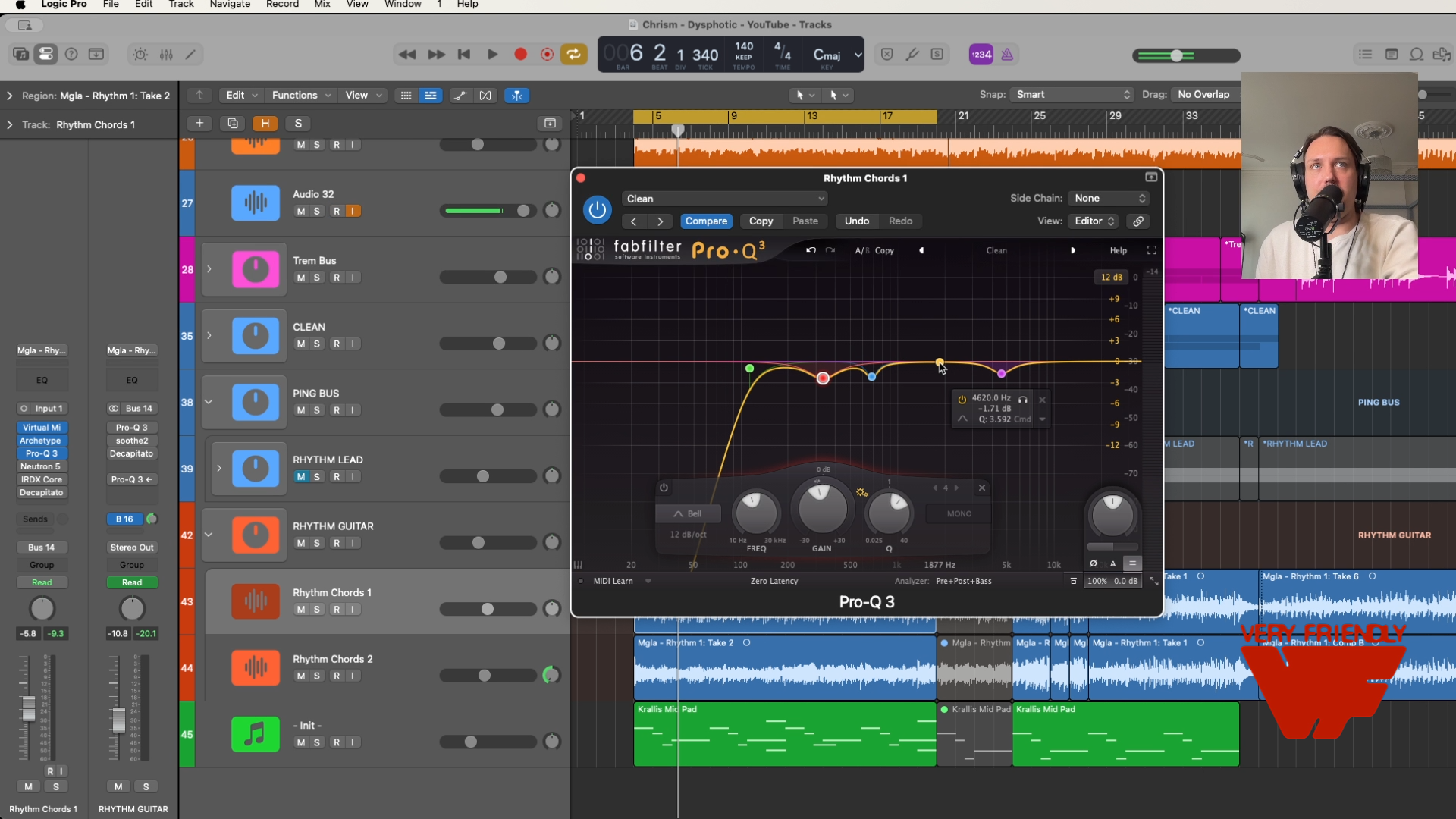
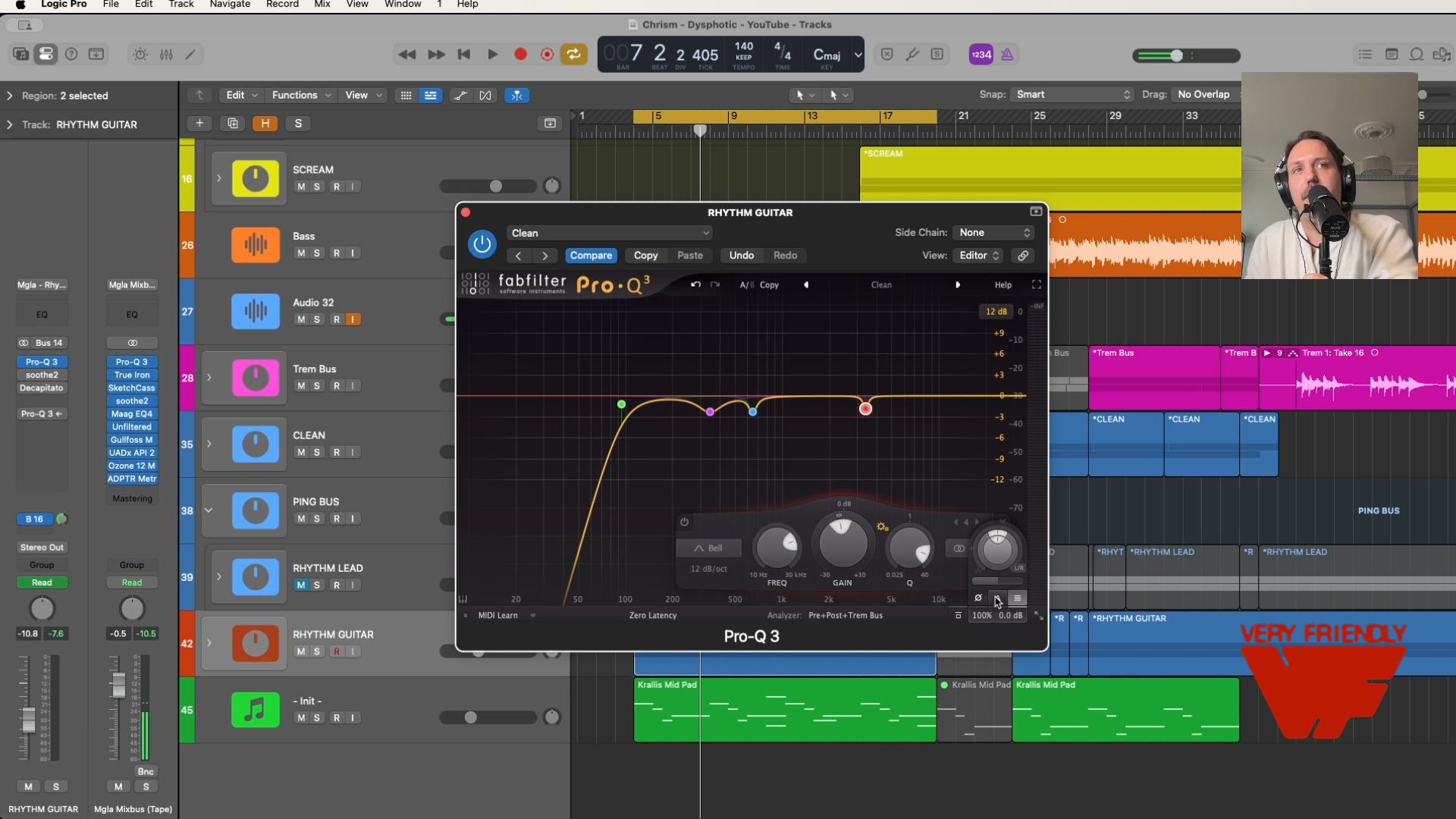
I cut out the low-end with a high pass somewhere between 70 and 120 Hz depending on the genre. What’s cool about Q3 is you can add the visual frequency for your bass guitar, and I like to cut to just above the fundamental frequency of the bass so they glue together.
Other tips include:
I will dip somewhere in the mud zone (150-500 Hz)
Cut the “radar ping” frequency (somewhere 500-800 Hz)
Cut the screech (somewhere 3000-4500 Hz)
No low pass! I want the hiss.
YOU CAN boost somewhere 1500 Hz - 2500 Hz for bite and cut, but if you dialed the amp right you may not need to
step four: transient shaper (neutron)
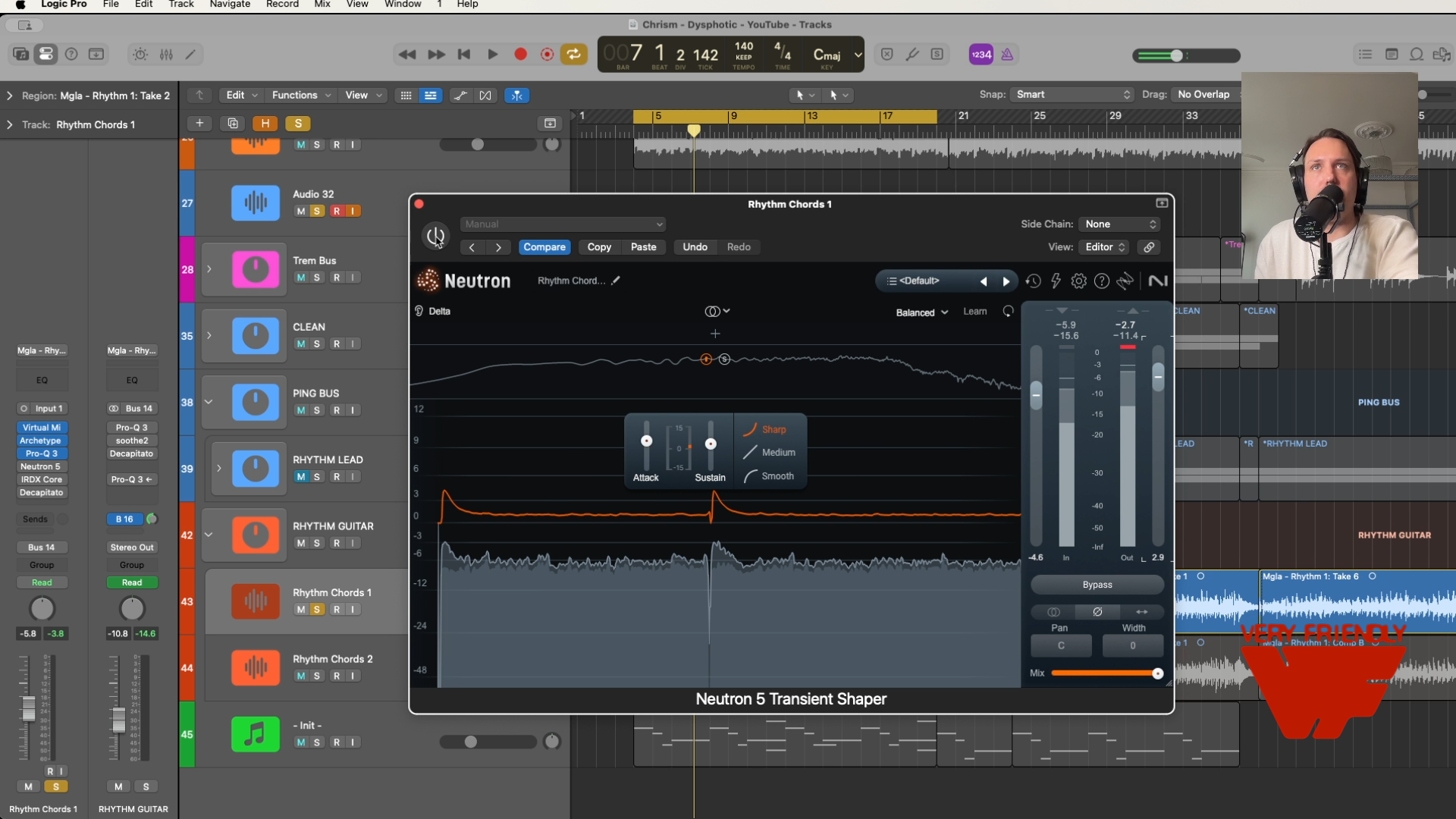
I just set this at Attack: 4 and Sustain: 2 every time. This gives more energy to the playing than you can get on DIs
step five: magical plugin (Irdx)
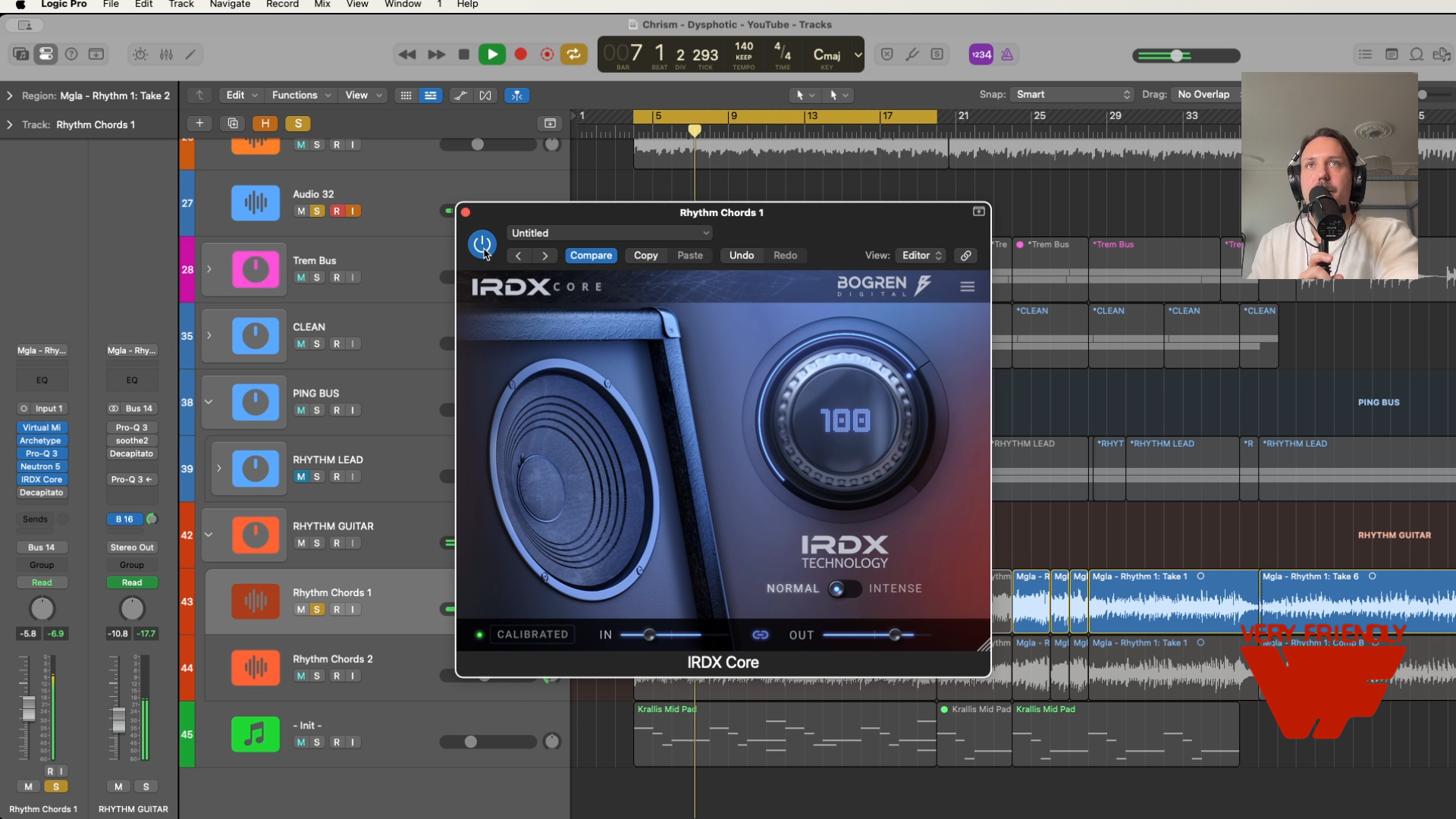
This is one of my favorites. It’s from Bogren Digital and all it does is make your amp sound real by introducing real hiss, pop and loudness. It’s really cool.
step six: bus EQ
Pro-Q3 again. This should really just be problem solving. Dips to take out frequency build up in the same zones as before
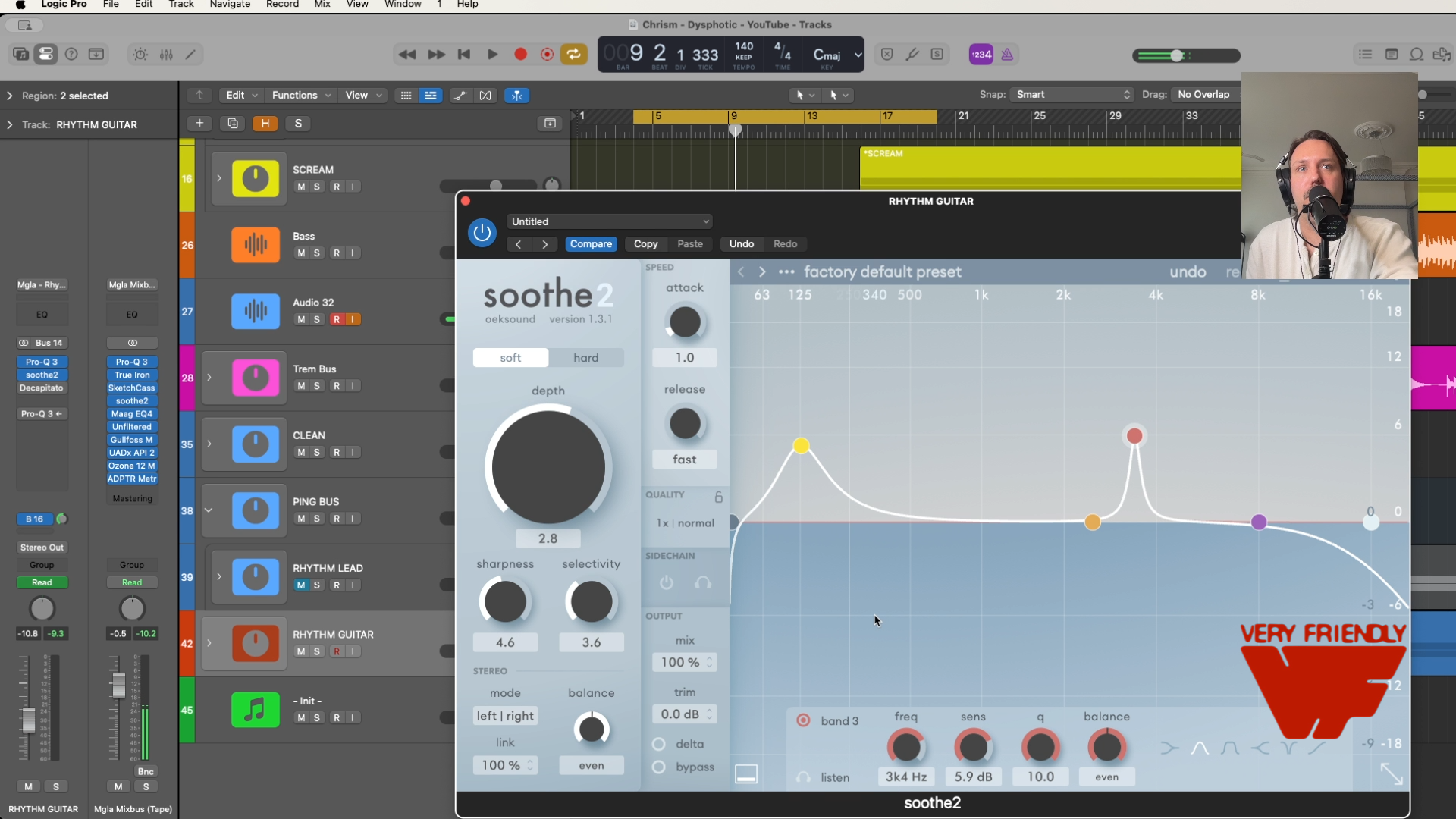
step seven: magical eq (soothe 2)
This just finds bad frequencies and cuts them. Another amazing plugin.
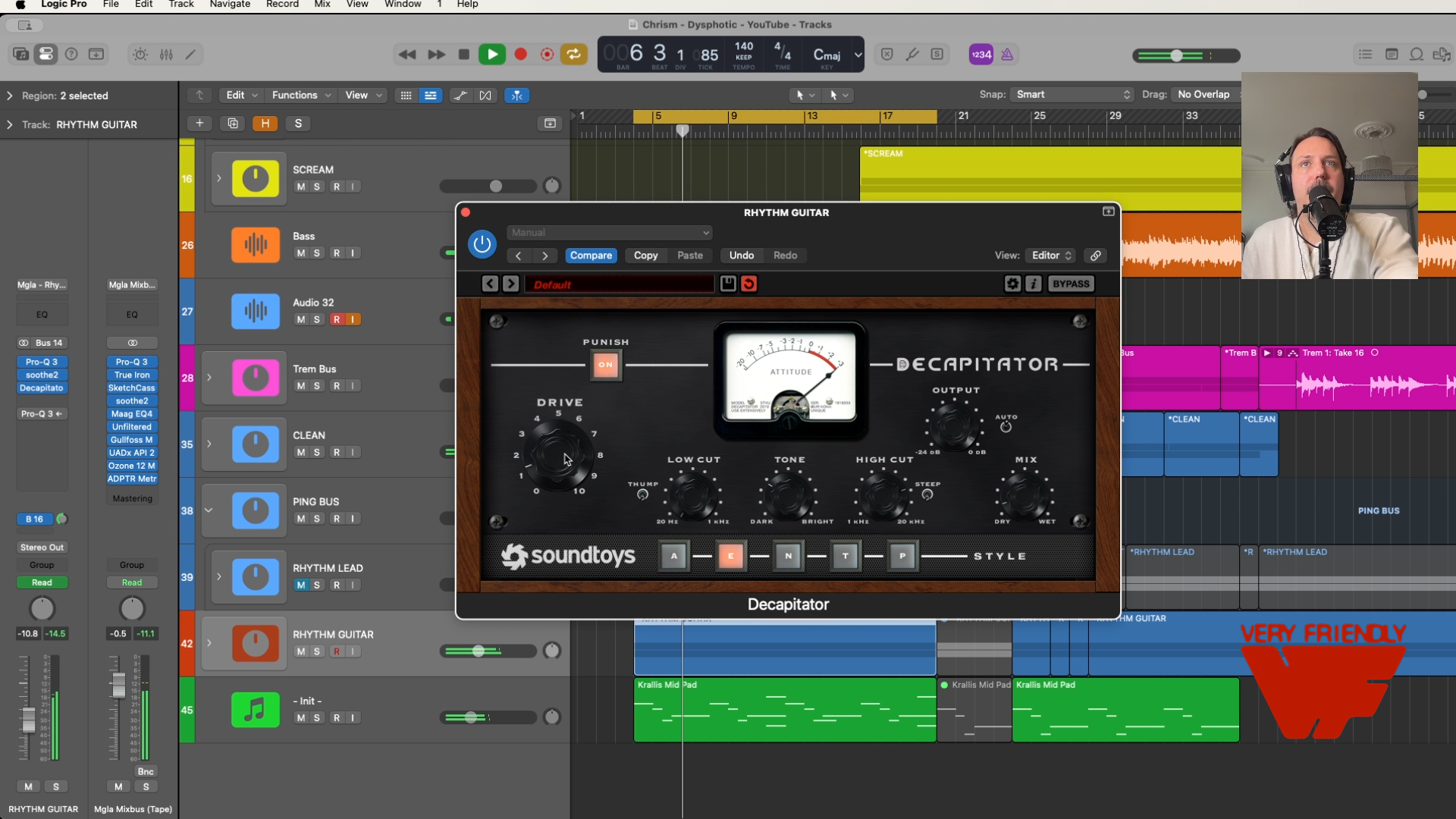
step eight: Bus saturation (diode or tape)
This makes it glue into the mix a little better. Nothing crazy, but goes a long way toward a more complete sound.
That combo has served me quite faithfully in transforming DIs into a raw live sound without reamping. Please enjoy!