
How to play a Benjolin in 2026
While subtractive synthesis is a fountain of possibilities, it’s easy to let the mind wander toward synthesis’ stranger frontiers when you’ve been tinkering long enough. After a lot of late nights searching phrases like “strangest synthesizers” and “synths for experimental music,” I found one that’s kept my attention for over a year. Legendary synth designer Rob Hordijk (rest in peace!) is known for a lot of strange, forward-thinking synthesis concepts, but the Benjolin is the design that’s had me salivating.
The Benjolin is a highly experimental, unstable synthesizer that is, at its simplest, composed of two oscillators and a “rungler.” Created after his equally famous and similar Blippoo Box, the two oscillators of the Benjolin modulate each other, and the output is a stepped, chaotic signal that you can use to fuck up whatever you want. The oscillator output alone is endless fun, capable of stuttering, grinding sounds few other synths can pull off. But it’s capable of more musical (although still very strange) applications at lower frequencies.
However, this article is not really about the history of the Benjolin or a deep dive into how it works. The people at Perfect Circuit have already done a comprehensive write-up on the history and mechanics of the device. What we’re outlining today is how you can actually play the damn thing.
The Benjolin, and indeed many of Hordijk’s designs, were initially intended to be DIY projects for the enterprising hobbyist. That, of course, creates a lot of problems for those of us with minimal soldering skills and electronics knowledge. So, here are a few different ways you can experience the chaos of one of the most interesting synthesizers ever made.
After Later Audio Benjolin V2
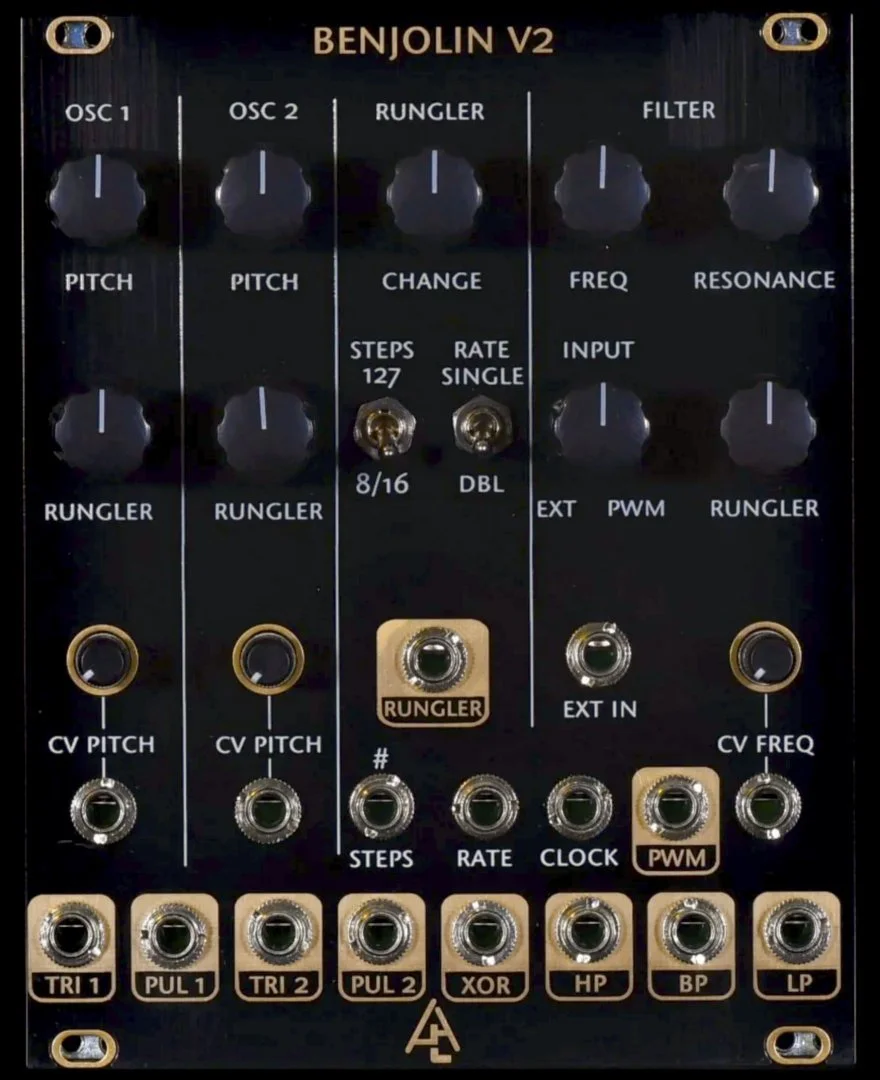
Image courtesy Modular Grid
Though Hordijk for most of his life intended for his work to remain DIY, toward the end of his career he teamed up with a few different Eurorack manufacturers to create a Benjolin module for the format. Version 2 of After Later Audio’s Benjolin might just be the definitive iteration. It features the dual oscillators with a variety of different waveforms, the rungler, and a High Pass/Low Pass/Band Pass filter with an external input. It’s all housed in a sleek black and gold faceplate, and while it takes up a lot of real estate in your skiff or case, the bang to buck ratio is astronomical.
Squaresolid benjolin

Image courtesy Reverb
Another, earlier Eurorack iteration of the Benjolin from this Indonesian manufacturer that’s similar to After Later Audio’s with the distinction of having X and Y potentiometers to control the rungler; whether this makes a meaningful difference to you is up to experimentation! It does not appear to be still be in production, but the advantage here is that secondhand units are much cheaper than After Later’s.
VCV Rack
Perhaps you don’t actually care that much about physically owning a synthesizer. After all, your Macbook can probably outperform most synthesizers in pure computational power. Or, you may just want to see what kind of sounds you can wrangle out of this thing before committing to a $350 purchase. VCV Rack, the virtual modular synthesis environment, has your back, with a variety of Benjolin and Blippoo emulations. The advantage here is that you can also try it out with whatever other modules you’d like, and can add whatever hardware MIDI implementation makes you happy. Recording your session is also a breeze. Here’s a Benjolin oscillator to get you started.
Ciat-Lonbarde peterlin
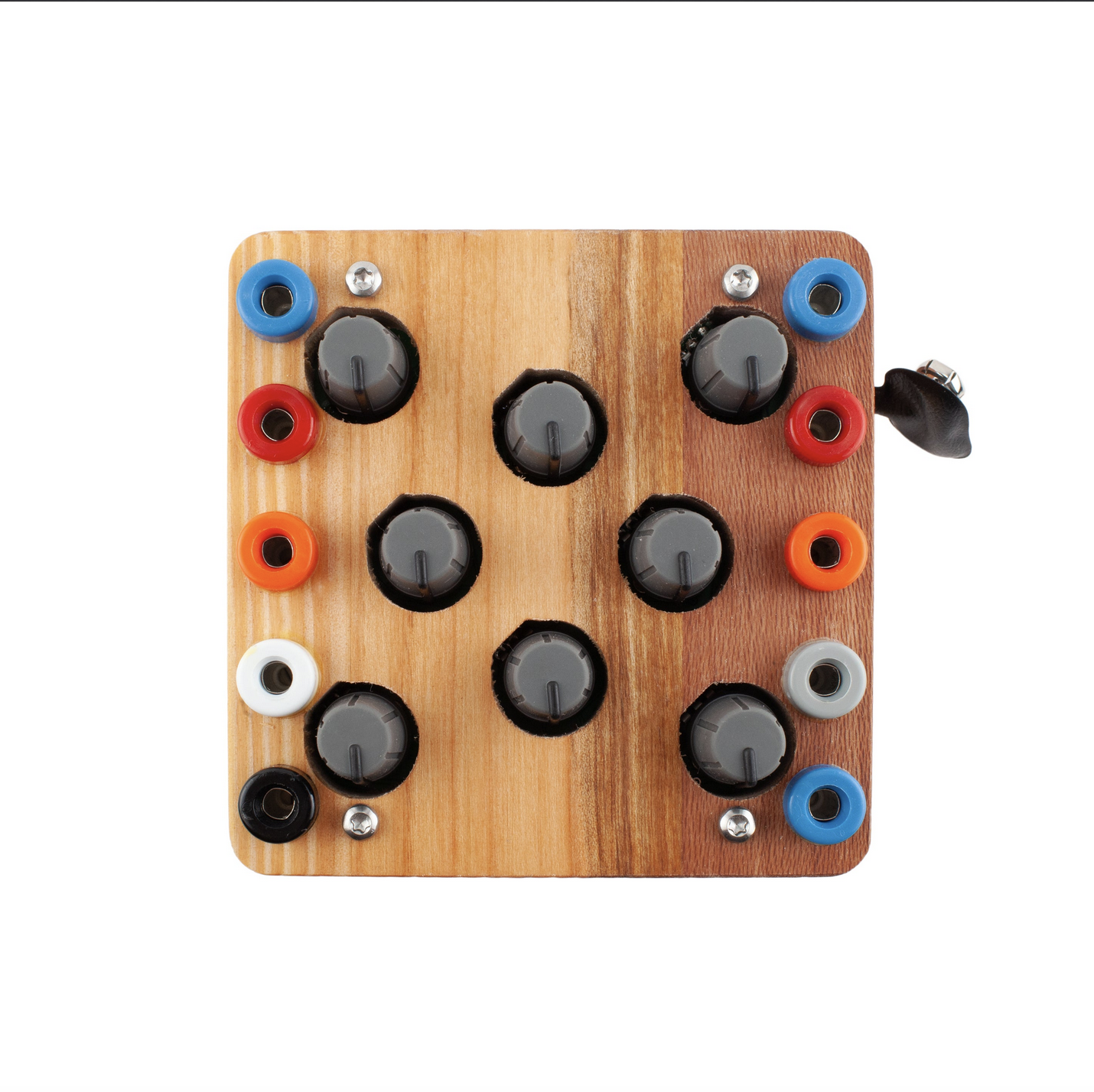
Image courtesy Patch Point
We’ve spoken about Ciat-Lonbarde and Peter Blasser on this blog before, and probably will again! The Peterlin is a self-contained desktop unit with all the features one would expect from a Benjolin, re-configured in a distinctly esoteric/Blasserian manner. It’s housed in wood and uses banana jacks for connectivity and self-patching, so while you’ll have a hard time connecting this to Eurorack, if you’re delving into Buchla or other non-3.5mm jack modular synthesis, there’s a lot of potential for even crazier sounds.
Monome norns benjolis
Norns is a rather niche open-source hardware environment for doing all manner of wacky synthesis. While Monome makes bespoke hardware that is generally quite well-received among its user base, there are also DIY methods involving Raspberry Pis and MIDI controllers that can get you most of the way there. Benjolis is a great way to get the Benjolin experience while also having access to a ton of other strange audio devices to play with.
Exagonal rooms desktop benjolin
It’s not clear if this unit is still in production, but we thought we’d include it anyway as secondhand units have a way of showing up on the market. This is a desktop unit with a distinctly DIY flair, apparently made-to-order. You may have some luck commissioning one, or you may just have to trawl used synth Facebook groups until one pops up!
