
How to Actually Use Compression (Without Killing Your Mix)
Compression is an automatic volume knob that kicks when your signal gets too loud. This enables lower gain frequencies to sound louder by default. That's it. Everything else—attack, release, ratio, knee—is just controlling how it turns things down and when.
Why do we need this? Because when you record drums, the difference between the quietest hit and the loudest smack can be massive. Same with vocals. Bass notes that ring out vs. dead notes. Compression evens that out so everything sits in the mix without forcing you to ride faders for 8 hours.
Compression doesn't just make things louder. It makes loud things quieter, which gives you more headroom to turn the whole thing up. The "loudness" you hear is makeup gain after you've squashed the dynamics.
The other reason we love and rely on compression is because different compressions also apply different types of musical color to your songs, which are quite pleasing to the ear.
The Four Types of Compressors (And What They're Actually Good For)
VCA
Usually used on buses. My go-to is API 2500.
Clean, fast, surgical. Use it when you need control without color. Good for drum buses, master bus, anything that needs transparent glue.
FET
I always grab either 1176 or Distressor.
Aggressive and fast. Smashes things in a musical way. Perfect for vocals that need attitude, drums that need punch, bass that needs aggression.
Optical
LA-2A is my go-to.
Smooth, slow, forgiving. The attack and release follow the signal naturally—you can't fuck it up. Best on bass, vocals, and anything that needs to sit back and breathe.
Vari-Mu
Fairchild is my default for vari-mu.
Warm, thick, expensive (even the plugins). Adds weight and glue. Use it on mix buses or the master when you want that "recorded in the '60s" vibe. Overkill for most metal applications.
How to Dial Compression By Instrument
It takes a little time to really “hear” compression, so I put together a cheat sheet of which compressors to use on different instruments and how to dial them.
Bass (Track Level)
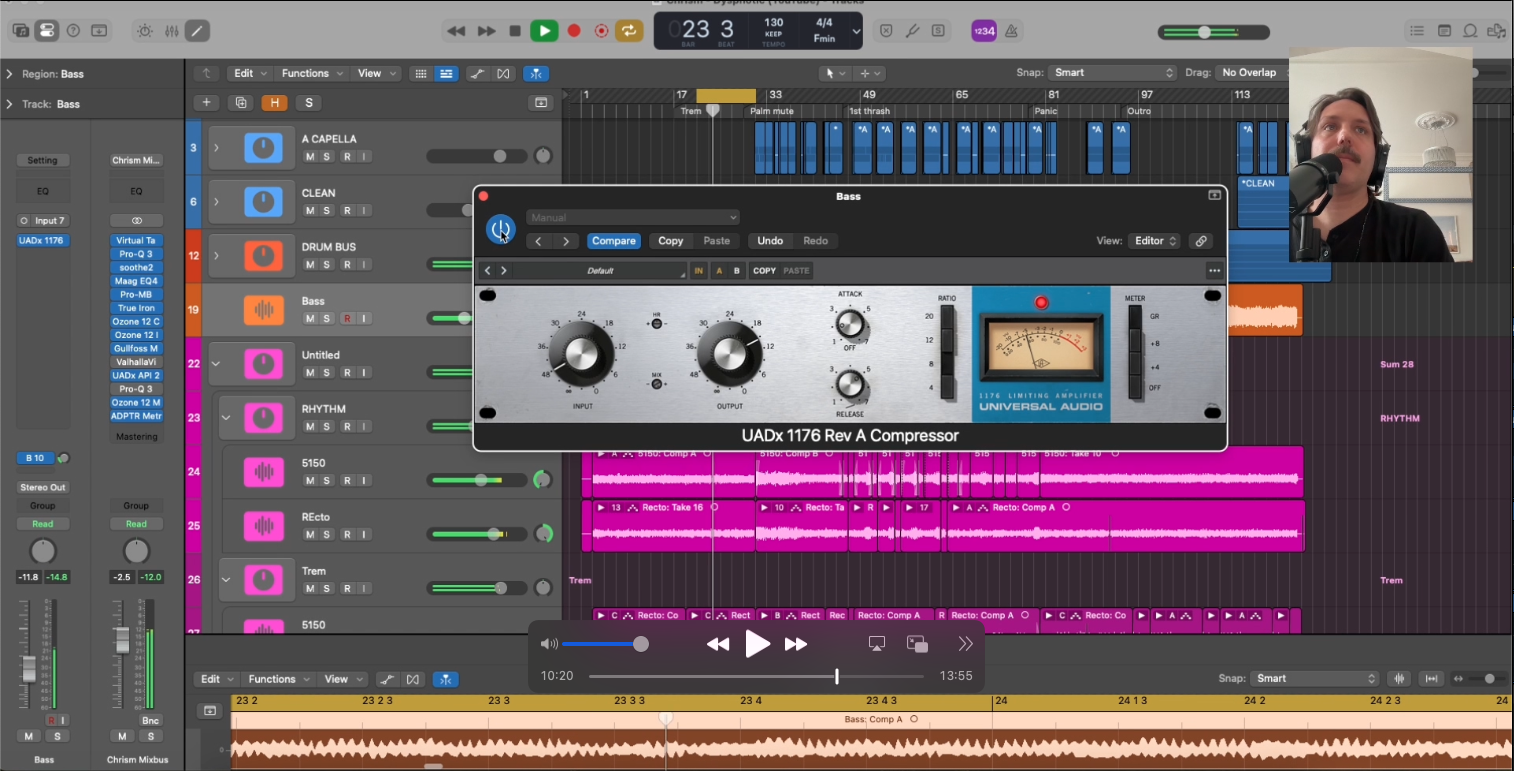
Use: FET
Bass is the foundation. If it's jumping around dynamically, your whole mix wobbles. FET compression can smooth it out, but it must be applied delicately.
Settings:
Gain Reduction: 3-5 dB on the loudest notes
Attack: Fast
Release: Medium
What you're listening for: The bass should feel locked in with the kick. No notes jumping out, no notes disappearing. If you can "hear" the compressor working (pumping, breathing), you're hitting it too hard.
Metal-specific tip: If you're doing that clicky Gojira/modern death metal bass tone, you might want an 1176. Optical is better for mellower music (LA-2A).
Guitar (Bus Level ONLY)
Use: API 2500 (VCA)
In my opinion you shouldn’t compress guitar at the track level. It makes guitar bland and mushy, and if you’re playing with high gain that is already compressing your guitar. In my opinion, all your compression happens on the guitar bus and then only very gently. The goal is “glue” not true compression.
Settings:
Threshold: Aim for max -1dB gain reduction
Ratio: 2:1 or 3:1
Attack: SLOWEST setting (let the pick attack through)
Release: FASTEST setting (recovers before the next chug)
What you're listening for: You should barely notice it's on. The guitars should sound tighter, more cohesive, like they're playing as one unit instead of four separate tracks. If you can hear the compressor pumping, you're doing it wrong.
Why bus-only? Because metal guitars are already compressed to hell from the amp distortion. Adding track-level compression just makes them smaller and more 2D. The bus compression is just gluing them together, not reshaping them.
Drums (Track Level)
Kick
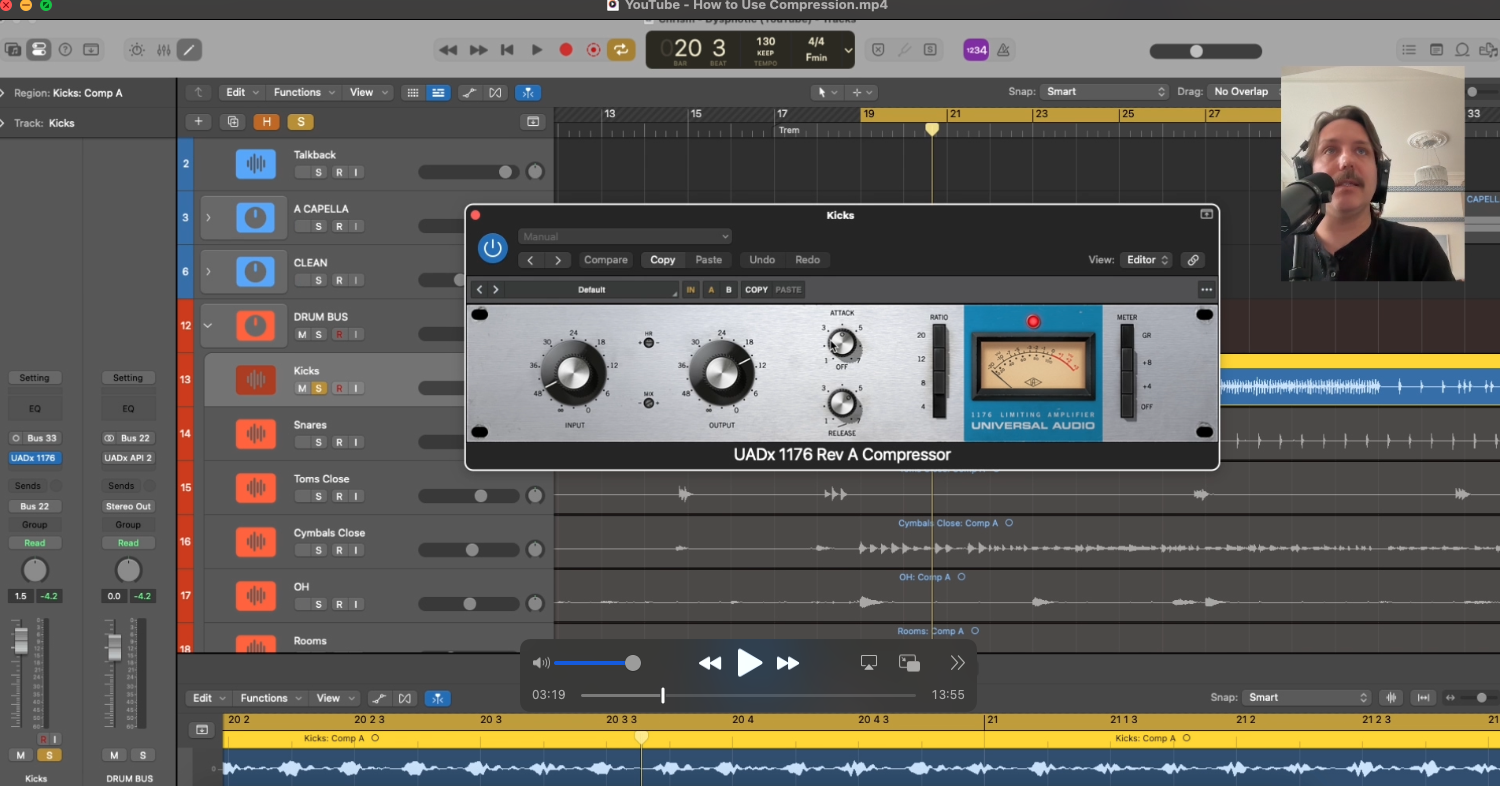
Use: 1176 or Distressor (FET)
You need a very fast compressor for drums so that it can grab the sound before it passes, which is extremely quick on drums. You want that front-of-the-mix punch. FET compressors are fast enough to catch the beater attack but clear enough not to smear it.
Settings (1176):
Ratio: 4:1
Attack: Medium-fast (3-4 on the dial)
Release: 5-6 (not too fast or it'll distort)
Gain Reduction: 3-5 dB on the hardest hits
Many engineers will aim for way higher gain reduction than this (-10db+). I don’t like this approach because it makes the drums sound mechanical. You lose all the finesse in the drummer.
What you're listening for: The kick should feel more consistent hit-to-hit, but you should still hear the beater smack the head and should still hear small dynamic variations. If it sounds soft or rounded off, your attack is too fast.
Snare
Use: 1176 or Distressor (FET)
Same as kick. You're going for punch and consistency without killing the crack.
Settings:
Ratio: 4:1 to 8:1 (snare can take more squash than kick)
Attack: Fast (2-3)
Release: Medium (5)
Gain Reduction: 5-8 dB
Metal-specific: If you're blending samples with your natural snare, compress AFTER you've blended them. Otherwise the compressor reacts differently to each source and it sounds weird.
Toms
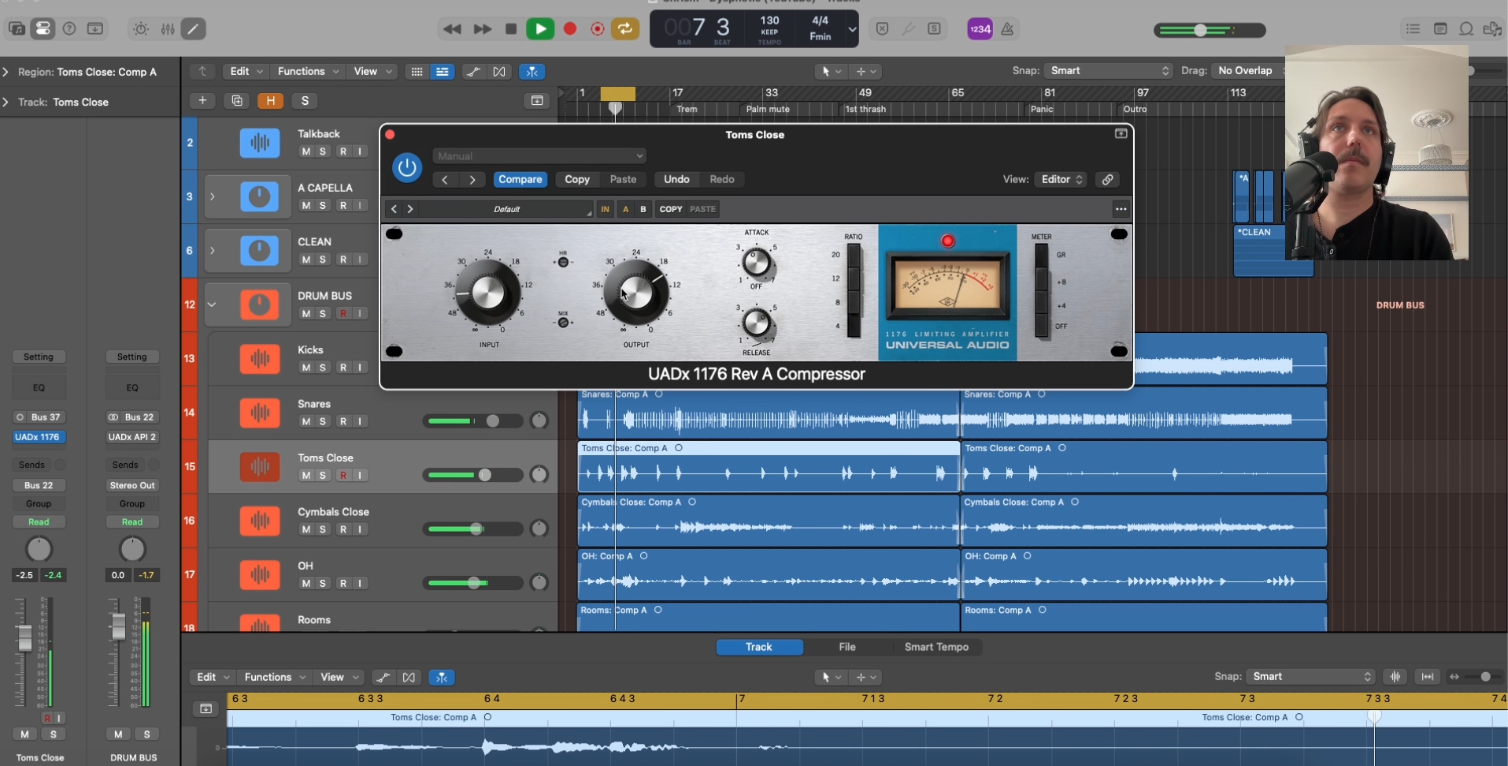
Use: 1176 or Distressor (FET)
Toms don't need aggression, they need to stay out of the way until they're hit. Optical keeps them smooth.
Settings:
Light compression, 2-4 dB max
Let them breathe, you're just keeping them even
Overheads
Use: API 2500 (VCA) or nothing at all.
Overhead compression is a taste thing. If your cymbals are already sitting right, don't compress them. If they're all over the place, use very gentle VCA compression (1-2 dB max) to tame the peaks.
Drums (Bus Level)
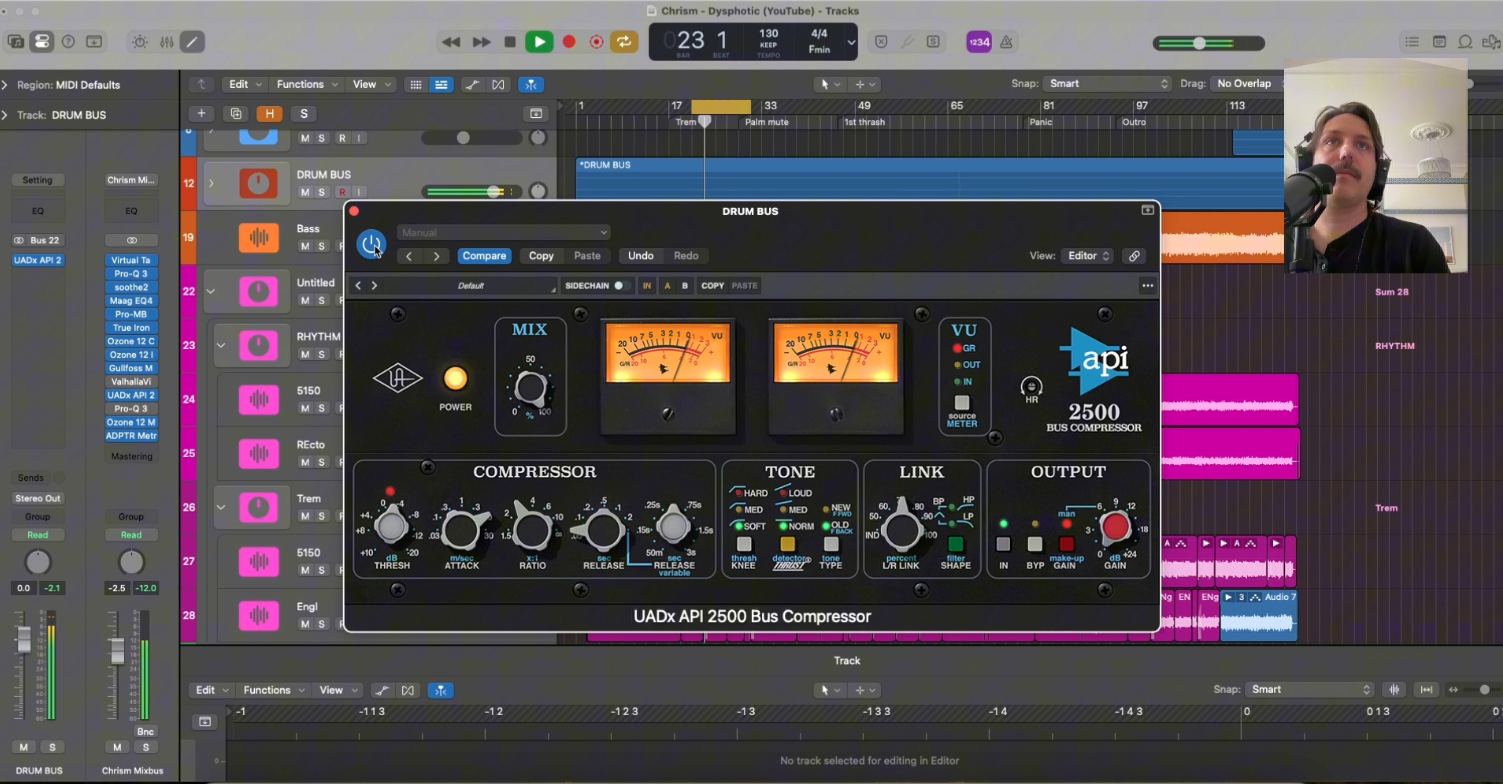
Use: API 2500 (VCA)
This is the glue. Everything you did on individual tracks gets summed together and the bus compressor makes it sound like one cohesive drum kit instead of 12 separate pieces.
Settings:
Threshold: Aim for 1-4 dB gain reduction
Ratio: 3:1 or 4:1
Attack: Medium-Slow (don't kill the transients)
Release: Auto or fast
Knee: Soft (makes it more transparent)
What you're listening for: The drums should feel tighter as a unit. The relationship between kick/snare/toms should feel locked. If you're getting more than 4-5 dB of gain reduction, you're hitting it too hard and it'll pump.
Parallel compression alternative: Instead of bus compression, some people parallel compress drums—blend a heavily squashed version underneath the natural drums. Works great for rock, but in metal it can make things sound too dense. Use sparingly.
Lead Vocals
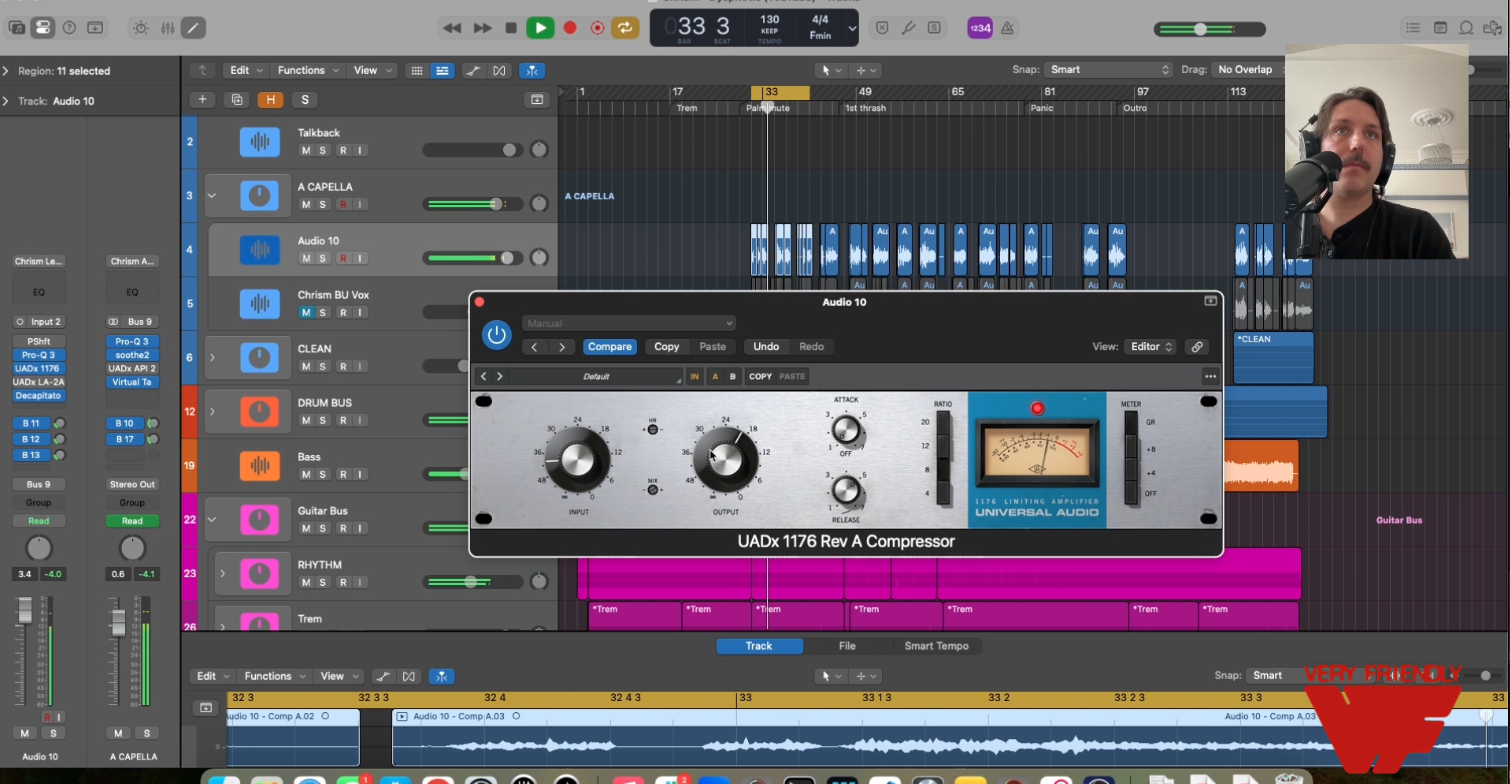
Use: 1176 (FET) into LA-2A (optical)
Vocals need two stages. First, catch the heavy lifting with the 1176 to smooth out the song. Then catch the last remaining peaks and add some musicality with the LA-2A.
I like the fastest attack for FET compression on vocals, especially for screamed vocals. I really try to avoid the initial pop that certain singers have.
1176 Settings:
Ratio: 4:1
Attack: Medium-fast (4)
Release: 5
Gain Reduction: 3-5 dB
LA-2A Settings:
Gain Reduction: 4-6 dB
Peak Reduction: 50-70%
What you're listening for: The vocal should sit consistently in the mix without you riding the fader. Whispers and screams should feel like they're on the same plane. But you should still hear the performance—the dynamics of the delivery, just tamed.
For screamed/harsh vocals: You can hit the 1176 harder (8:1 ratio, 6-8 dB reduction). Harsh vocals are already heavily compressed from the technique, so they can take more squashing without sounding over-compressed.
Backup Vocals
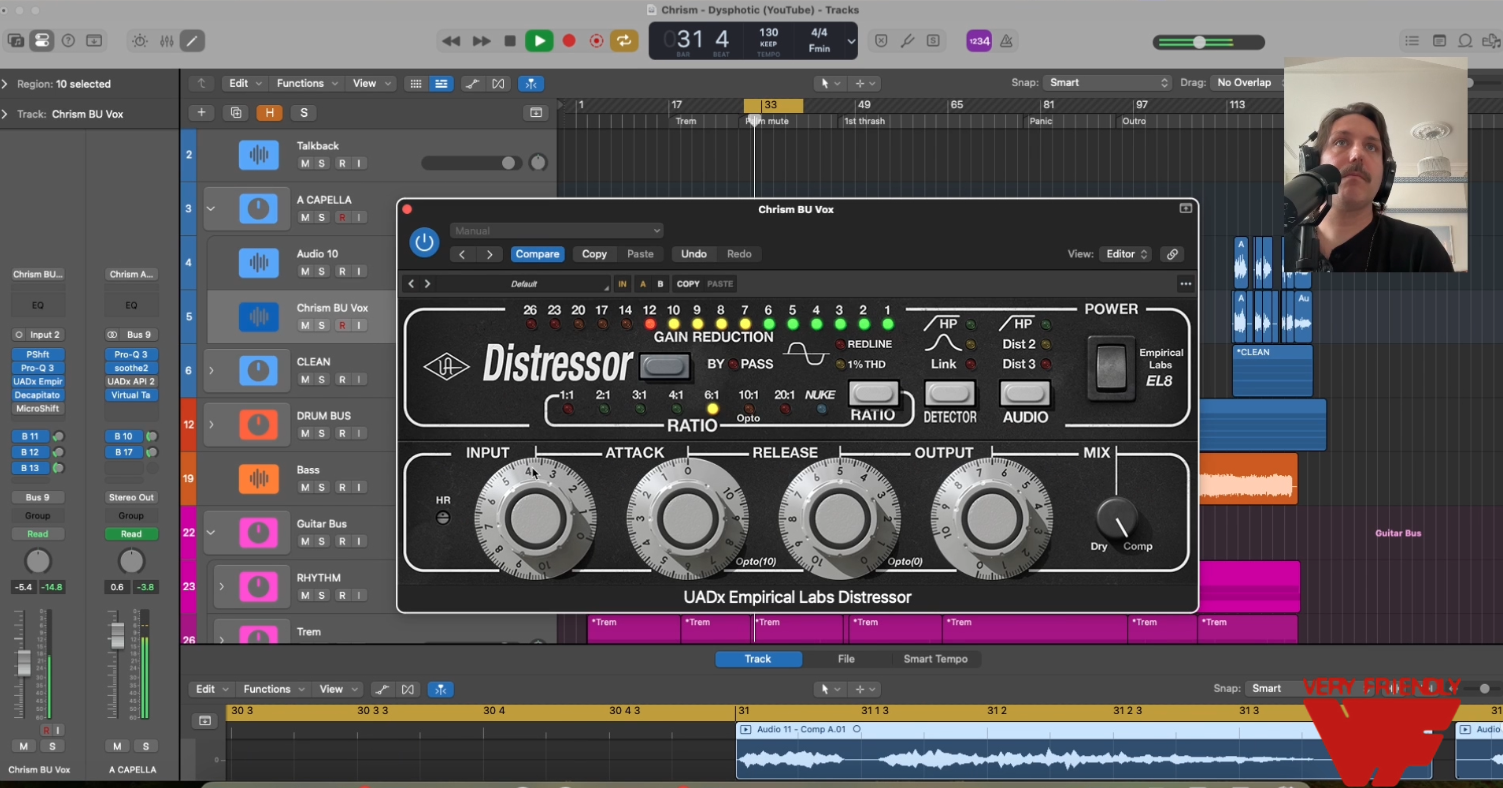
Use: Distressor
I like to really pin the backup vocals to one level, which means high ratio, fast attack, high gain reduction
Distressor Settings:
Ratio: 6:1
Attack: Fast (0)
Release: 5
Gain Reduction: 10-12 Db
Vocal Bus
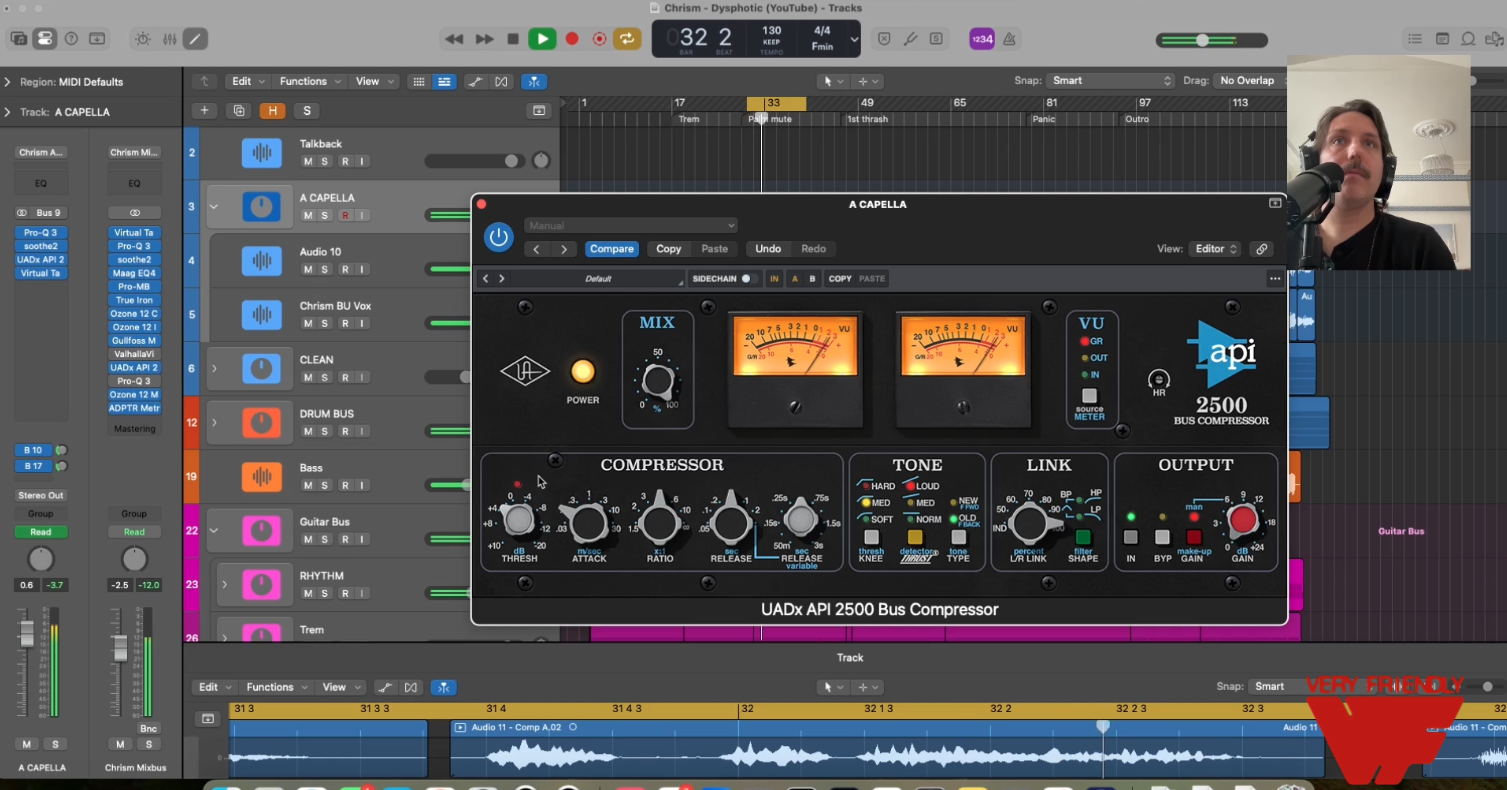
Use: API 2500
This isn’t about smashing the vocals, just gluing them into the mix very subtly.
API 2500 Settings:
Ratio: 2:1
Attack: Fast
Release: Slow
Gain Reduction: 1-3 Db max
Synths
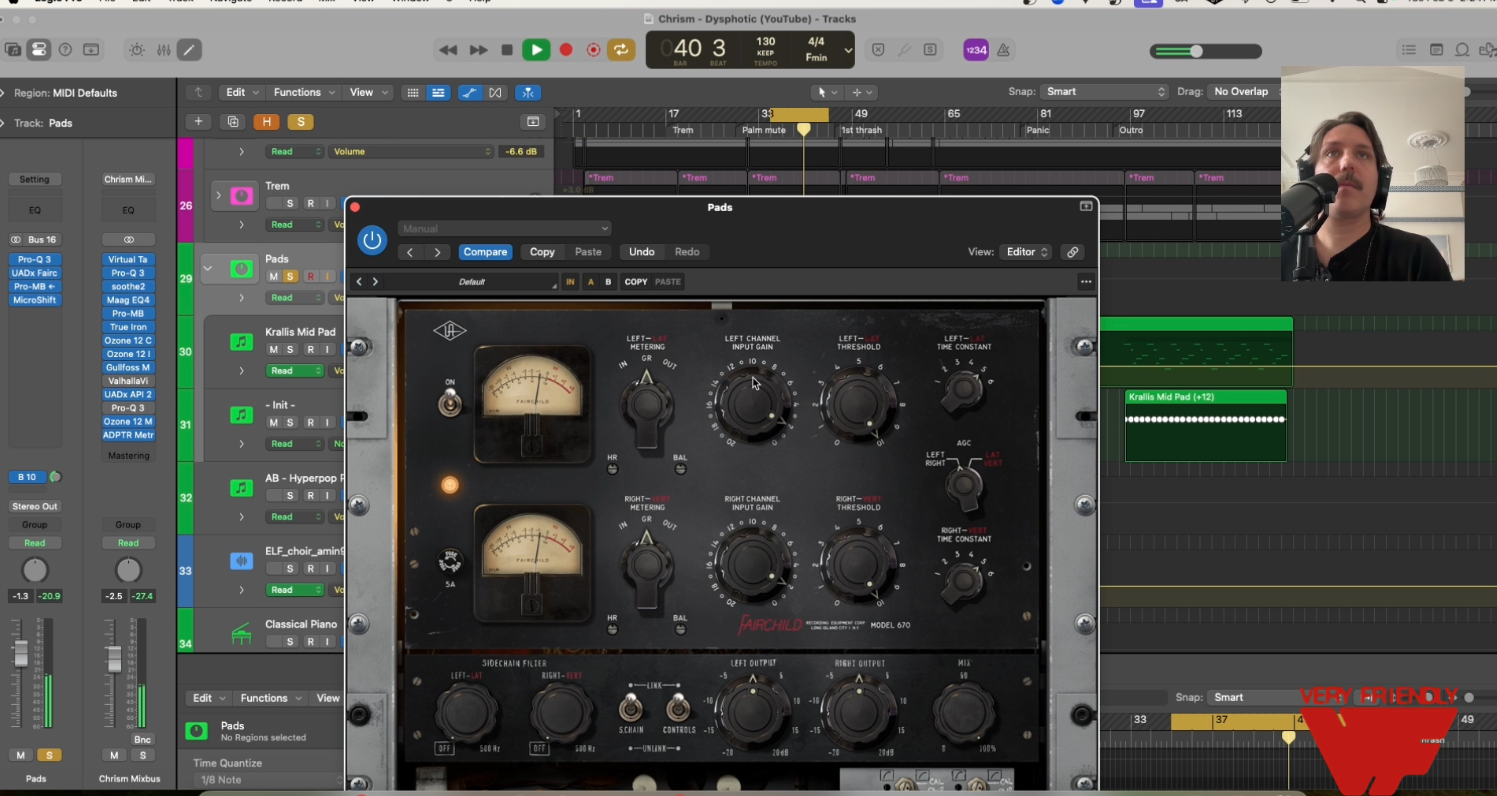
Use: Depends on the synth
Pads/atmospheres: LA-2A, gentle compression (2-3 dB) just to keep them even
Aggressive synth bass: 1176, treat it like bass guitar
Lead synths: 1176 or API 2500, medium compression (3-5 dB)
Arpeggios/plucks: Usually don't need compression
General rule: If the synth is programmed, it's already dynamically consistent. Only compress if it's serving a mix purpose (gluing it to other elements, adding color) or if you're using it to shape tone.
Common Mistakes (What NOT to Do)
Over-compressing because you can't hear it working. If you can't hear the compressor doing anything, that doesn't mean it's not working. It means it's working right. The second you "hear" compression (pumping, breathing, loss of dynamics), you've gone too far.
Compressing everything just because it's there. Not every track needs compression. If something is already sitting right in the mix, leave it alone. Compression is a problem-solving tool, not a mandatory step.
Using the wrong attack time. Fast attack kills transients. Slow attack lets them through. If your drums sound dull after compression, your attack is too fast. If they're still too punchy and inconsistent, your attack is too slow.
Soloing tracks to set compression. Never set compression while soloed. What sounds good in solo rarely works in the context of the full mix. Always compress with the full mix playing.
Thinking compression makes things louder. Compression makes loud things quieter. Makeup gain makes things louder. Don't confuse the two.
The Real Secret
Compression is about control, not power. Light compression on everything will give you a tighter, more professional mix than heavy compression on a few things. If you're consistently slamming compressors into 10+ dB of gain reduction, you're not mixing, you're destroying.
Start subtle. Add more if you need it. But most of the time, you need less than you think.
And if you're compressing guitars on individual tracks, stop. You're making your job harder.
Want to hear what proper compression sounds like on heavy music?
Video walkthrough here. And you can hear the song in this video here on the Chrism Bandcamp.