
Fixing a Muddy Mix, Fast
The most common challenge self-producing musicians face is muddiness. It can take a little experimentation to truly hear muddiness, but it the most glaring culprit separating professional mixes from amateur demos.
Muddiness usually has the same root cause: too many instruments competing for the same frequencies between 100Hz and 400Hz. Kick drum, bass guitar, rhythm guitars, vocals, and synths all have energy in that range, and when they build on top of each other, everything turns into soup.
Here are four practical tools that fix it.
1. Start with your arrangement
Before you touch a single plugin, look at what's actually happening in your arrangement. Most musicians are trying to do too much at the arrangement stage. Too many pads, too many guitar tracks, overall too many low-end layers playing at once.
In rock and metal especially, drop-tuned guitars push their fundamental frequencies much lower than people expect, which means your guitars ARE part of your low end whether you like it or not. The same is true of synth pads in EDM and other synth-forward genres. Thin out the arrangement in dense sections before you reach for EQ.
As a rule of thumb, cut more instruments out than you’re comfortable with, and you will stop wrestling with your mix.
2. EQ carving: give every instrument its own lane
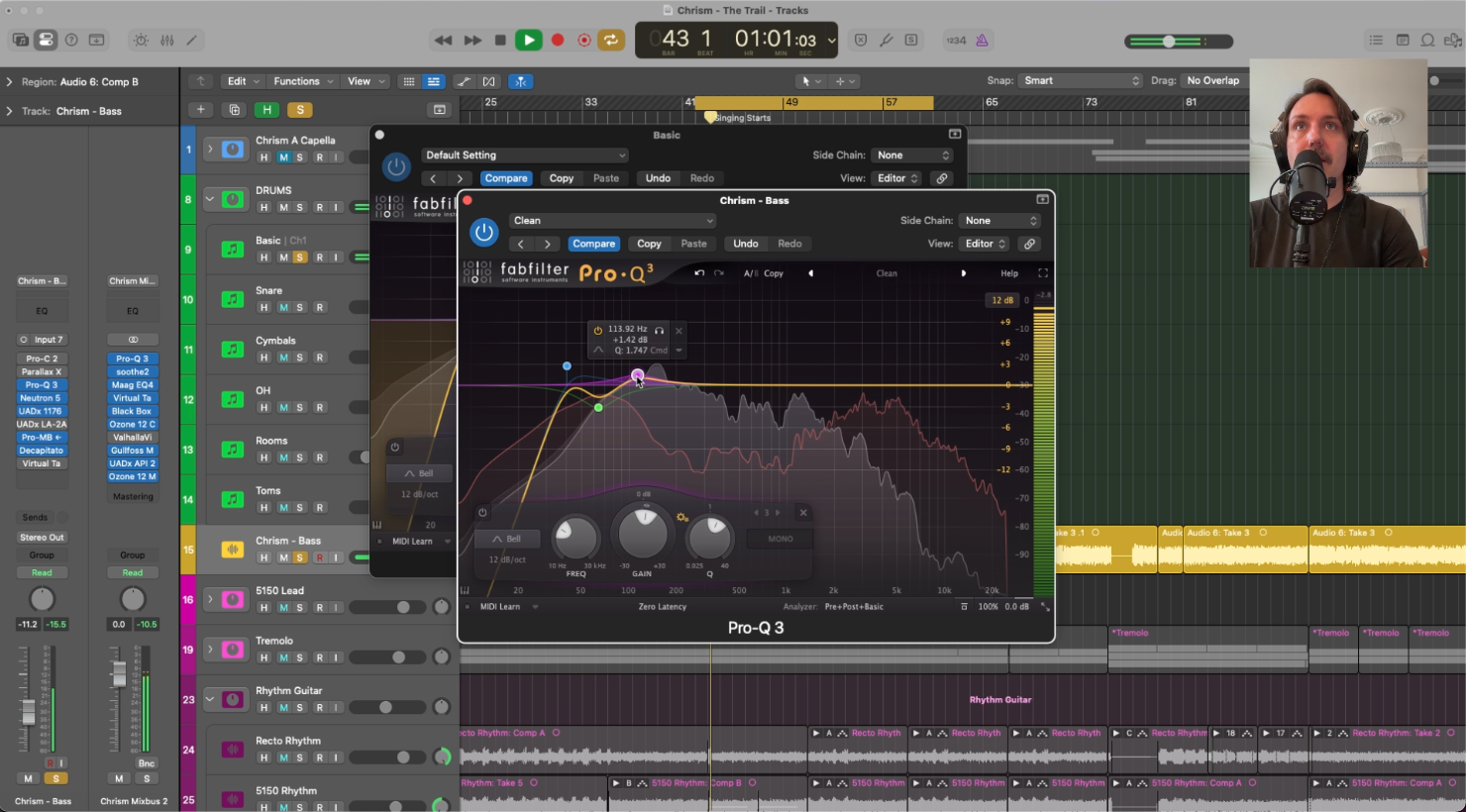
Carving is the practice of cutting frequencies in one instrument to make room for another. If your bass lives in the 80–150Hz range, notch a small and narrow cut in this range on your kick and guitars so the bass has space to breathe.
On rhythm guitars, a high-pass filter at 80-100Hz and a notch around 250–350Hz removes the muddy blanket that makes dense mixes feel claustrophobic. The goal isn't to make each instrument sound great in solo — it's to make each instrument sound great in the context of everything else.
3. Sidechain compression: dynamic separation in real time
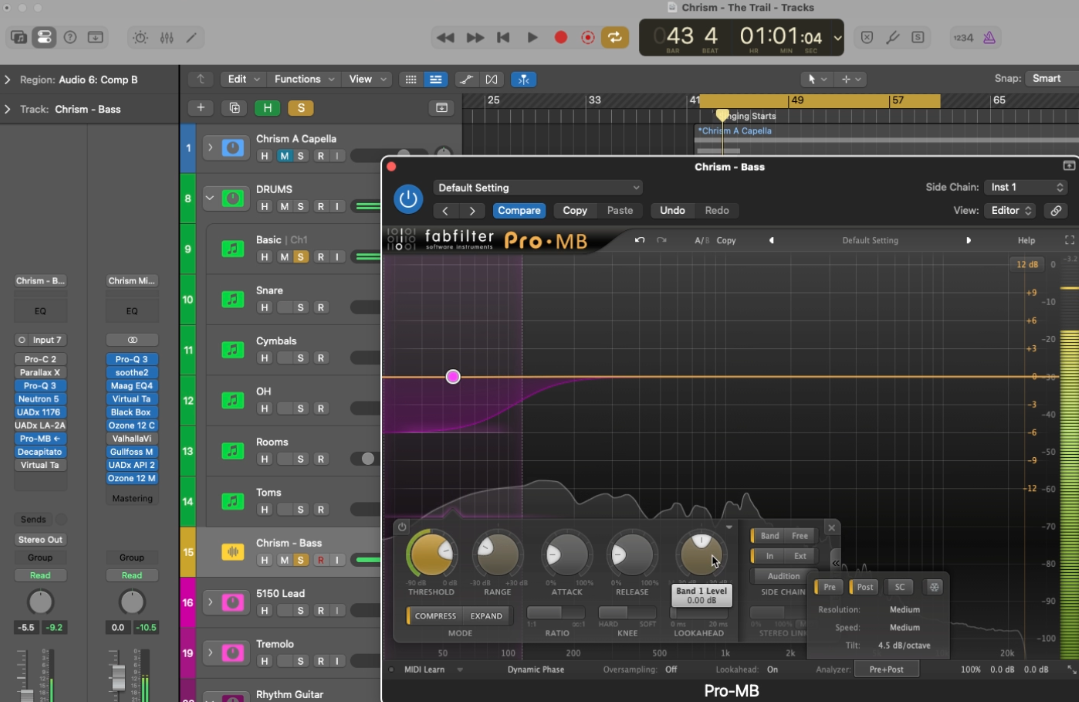
EQ carving creates static space. Sidechain compression creates dynamic space, which is more powerful.
The classic example: sidechaining your bass to duck slightly every time the kick hits, so both instruments can exist at full level without fighting each other. Set a fast attack (5–15ms) and a medium release (50–100ms) so the ducking is tight and musical rather than obvious and pumping.
This is the technique that makes a kick drum feel like it physically displaces the bass, and once you hear it working, you'll put it on every mix.
4. Saturation — harmonic separation without cutting anything
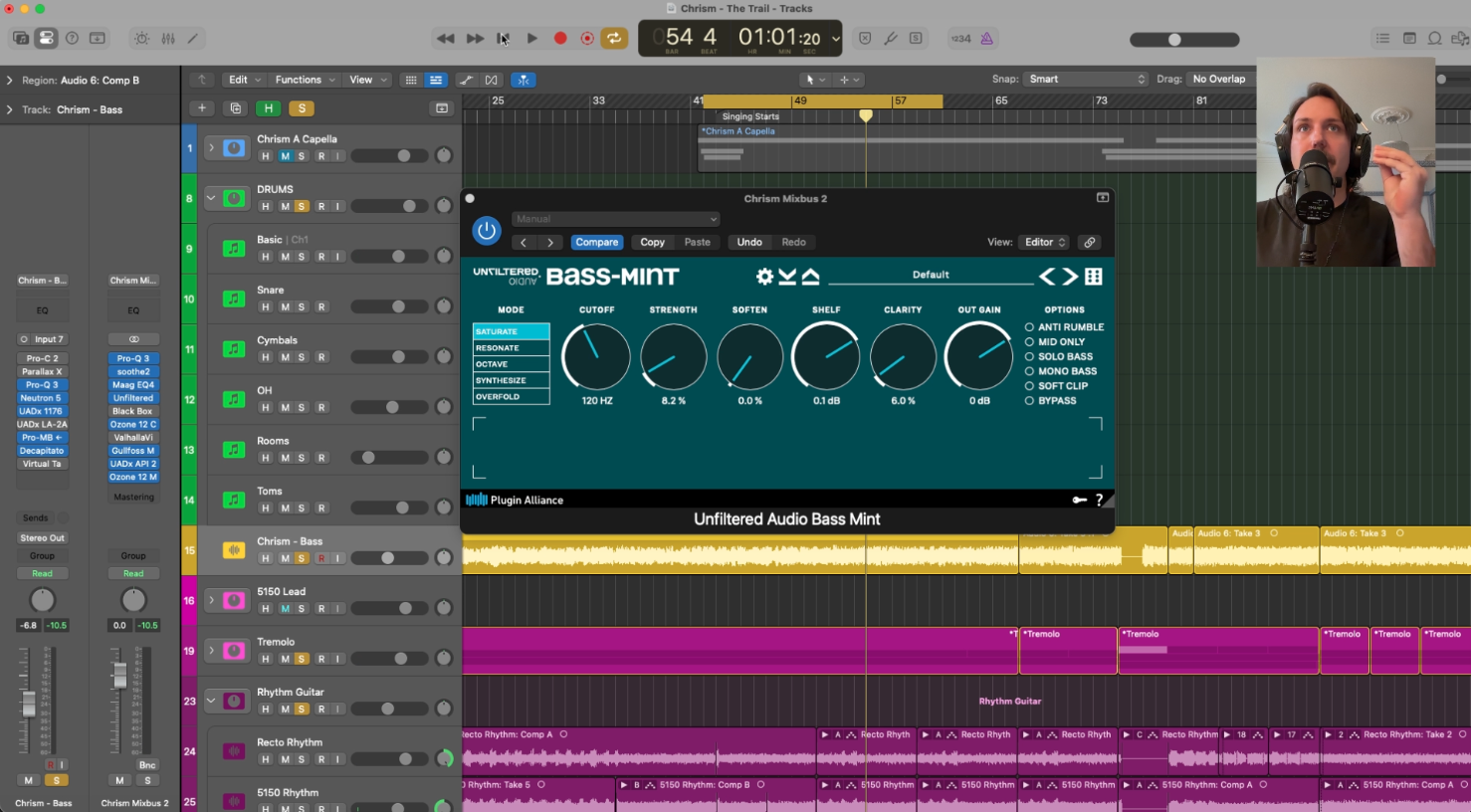
This is the one most people skip, and it's the sleeper insight that separates a good mix from a great one. When you add gentle saturation to a muddy bass or kick, the harmonic distortion generates upper frequencies that weren't there before, shifting the perceived energy of the sound upward without touching the low end at all.
The result is a bass that feels tighter and more defined even though you haven't cut a single frequency. In metal, a touch of tape saturation or tube saturation on the bass bus is often the difference between a bass you can feel and a bass you can't find.
My go to for this is a plug-in called Bass-Mint. You can pick it up for $25 and throw it on your mixbus for some instant low end clarity.
Muddiness is a space problem, not a volume problem. The instinct is always to boost things: boost the kick so it cuts through, boost the guitars so they feel heavy, boost the bass so it sits. But every boost makes the problem worse.
The fix is giving each instrument its own defined territory, then using compression and saturation to maintain that separation dynamically. Do that, and the muddiness disappears on its own.