
Achieving Huge Guitar Tone with Amp Sims
The secret to massive recorded guitar tone isn't one perfect amp sim; it’s about creating symmetry and balancing. Professional rock and metal records often have a wide, three-dimensional wall-of-guitar that fills the speakers. Here's a quick approach to get that in 5 minutes.
1. Choose two amp sims that balance each other
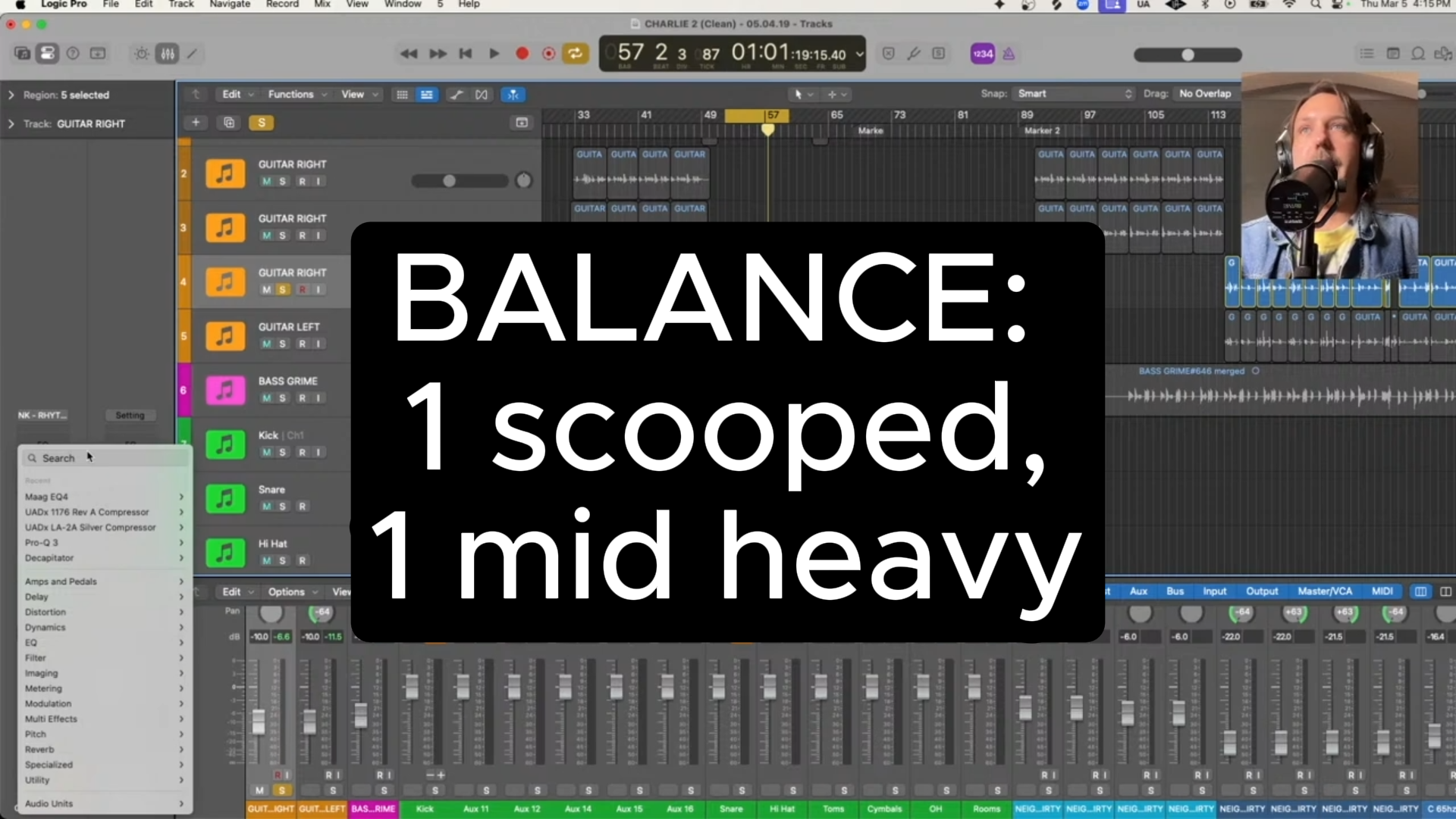
Before you touch a knob, think about contrast. You want one amp that's crispy and biting, something with a lot of upper midrange aggression and presence (like a Marshall or a Vox etc) - and one that's warmer and woodier (like a Soldano or 5150) to fill out the low end.
Instead of competing, a complementary pair of amps produces a wide and full stereo image that feels more alive than two identical tones ever would.
2. Dial the tones as a pair, not individually
The biggest mistake people make with double-tracked guitars is dialing each amp to sound great in isolation. You need to dial them as a pair with the contrast in mind. Let one side sound too bright, and the other side sound too dark. What matters is the sum of the two.
If you’re pursuing a high gain sound, DON’T dial the gain the amp to a high level. This can paradoxically hurt the perceived gain of your guitars. Use less gain than you think you will need (I tend to be somewhere between 3 and 5 on the gain knob, almost regardless of which amp I amp using).
To make up the gain, use an overdrive pedal in front of both amps. Zero drive on the overdrive; dimed on the level. This tightens the low end and pushes the front end of the amp harder without adding extra gain. It's the trick that makes the difference between a flabby chug and a focused, punchy one.
3. Use third-party IRs, not the stock ones
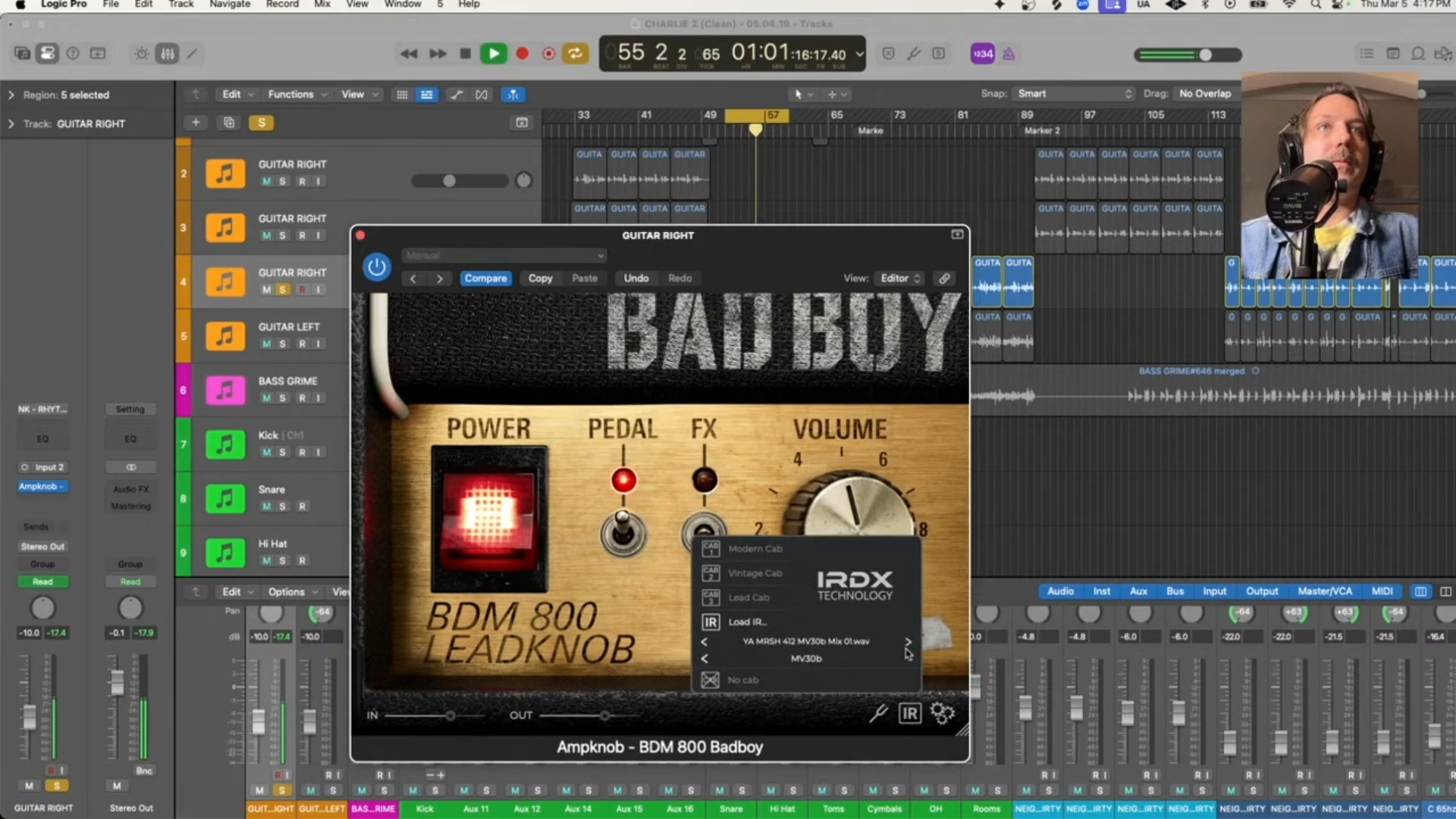
The cabinet is actually doing the most work in your guitar tone. If you’re working in the box, you can’t rely on stock IRs to get an organic sound. Third-party IRs from companies like York Audio are a significant upgrade; they're based on real cabinets captured in controlled environments, and they have a dimensionality that stock IRs often lack. For the Marshall side, York Audio's Marshall 4x12 IR is the natural pairing. For the 5150 side, York Audio also has a 5152 cabinet IR. Use a mix of mic positions — an SM57 for the attack and presence, and a Royer 121 blended in for woodiness and low-end body. The 121 is what adds that thick, organic quality that makes the guitars feel like they're coming from a real cab in a real room.
4. Hard pan and trust the contrast
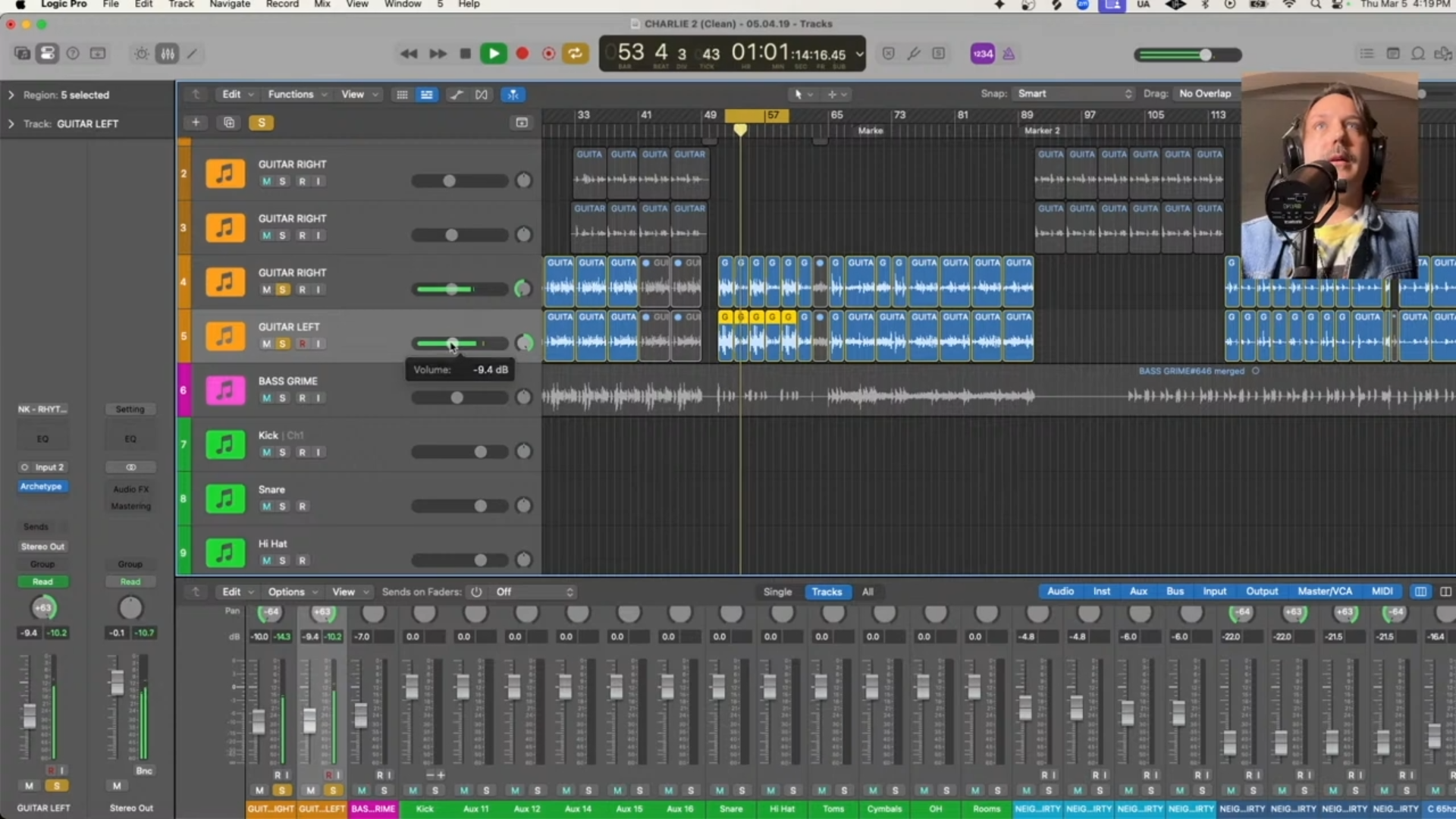
Once both tones are dialed, hard pan them — one to the left, one to the right. Don't second-guess the panning. The width is the point. What sounds like too much contrast when you're listening to each track in solo will balance out beautifully in the stereo field. The Marshall brightness on one side and the 5150 warmth on the other create a complete frequency picture together that neither could create alone.
One thing worth noting on the low end: don't scoop it. The Will Putney school of metalcore production — Every Time I Die, Knocked Loose — is built on massive, present low end in the guitars. That warmth isn't a mistake or a mixing accident. It's an intentional choice to keep the guitars feeling heavy and physical rather than sharp and thin. Let the 5150 side carry that low-end weight and resist the urge to cut it away.
Two amps, hard panned, chosen for contrast rather than similarity. That's the whole framework. Everything else is just dialing in the details.